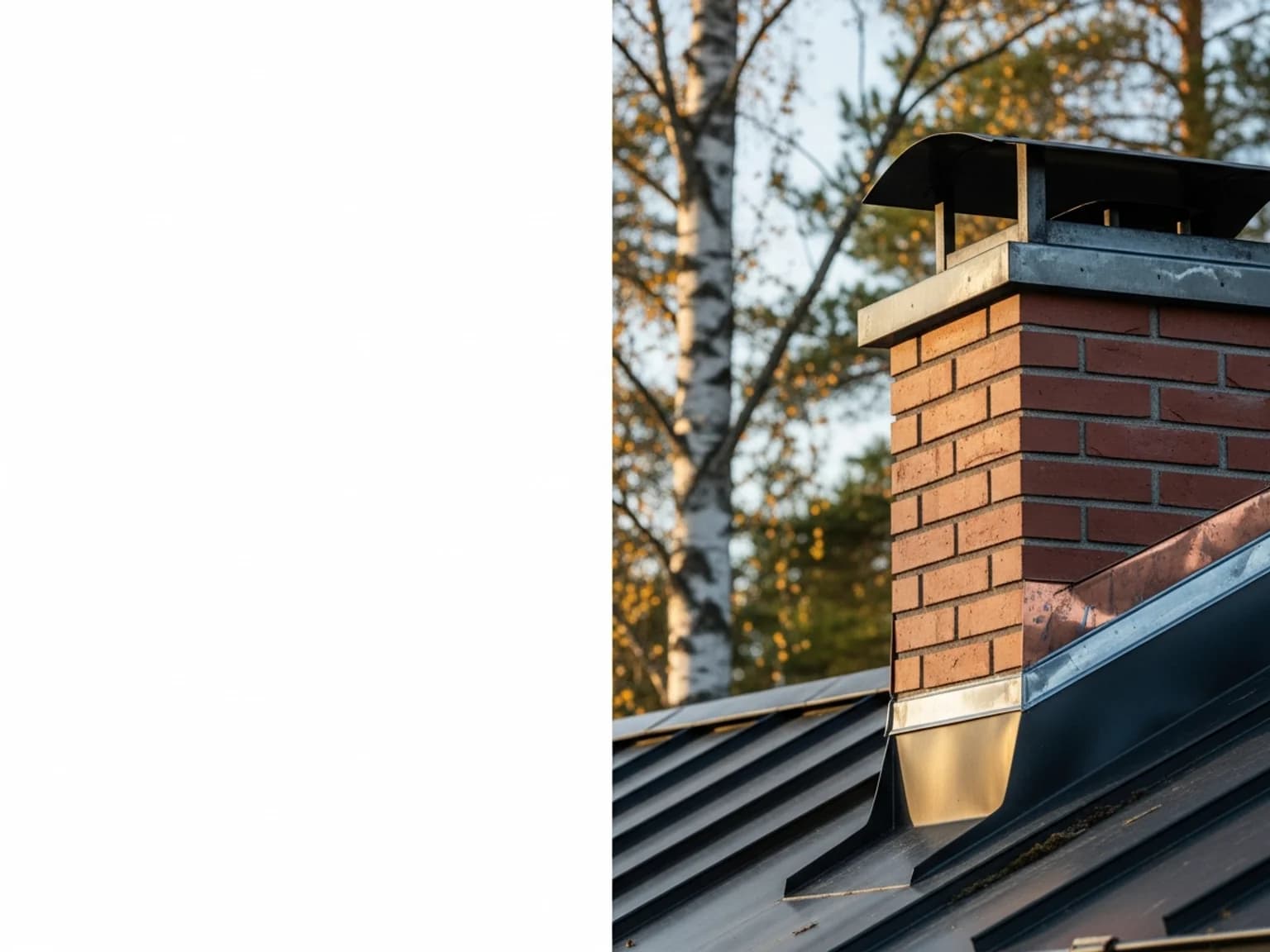
Chimney flashing is a sheet-metal waterproofing system installed around the chimney that prevents rainwater from entering the roof structure through the joint between the chimney and the roof covering. The flashing is arguably the most demanding single detail on a roof, as it must withstand temperature fluctuations, thermal movement, wind loads, and continuous water exposure for decades. A chimney is typically a brickwork structure that expands and contracts with temperature at a different rate to the surrounding roof structure. The flashing must be able to accommodate this movement without compromising its watertightness. For this reason, chimney flashing consists of several separate sheet-metal components that overlap one another and allow controlled movement. Incorrectly executed or aged chimney flashing is one of the most common causes of roof leaks in Finland. Brickwork deteriorates over time, flashing seams open up, and sealants harden. Monitoring the condition of chimney flashing and timely replacement save significant costs in moisture-damage repairs.
Structure and Components of Chimney Flashing
Chimney flashing consists of four main parts: the upper apron, side flashings, lower apron, and the turn-in strips set into the chimney wall. The upper apron is installed on the uphill side of the chimney and diverts water to the sides. The side flashings continue directing water past the chimney, and the lower apron collects water from behind the chimney and directs it onto the roof covering.
Each sheet-metal component is folded so that it rises at least 150 mm up the chimney wall. The upper edge is bent into a chase cut into the mortar joint of the chimney brickwork, which is then sealed with a flexible sealant. This recessed section is known as the raglet strip, and its purpose is to prevent water from running between the flashing and the brick wall.
The sheet-metal components are typically made from 0.5–0.6 mm hot-dip galvanised steel or copper sheet. Copper is the most durable option and, once patinated, lasts virtually indefinitely, but it is expensive. Steel sheet is painted to match the roof colour and has a service life of 25–40 years depending on the level of protection.
Installation and Managing Thermal Movement
Installing chimney flashing requires experience and sheet-metal working skills. The work begins with cutting a chase into the chimney wall, into which the upper edge of the flashing is set. The chase is 20–25 mm deep and is cut with a diamond blade into the mortar joints. A backing rod is placed at the bottom of the chase and the sheet-metal component is mechanically fixed before the sealant is applied.
Managing thermal movement is the core design challenge of chimney flashing. A masonry chimney can move up to 5–10 mm relative to the roof as the temperature changes. The overlapping structure of the flashing components accommodates this movement: the parts are not rigidly connected to one another but slide within the overlap zone. The sealant must be permanently elastic — setting-type sealants will crack during the first winter.
On a metal roof, the lower apron of the chimney flashing is overlapped beneath the roof profile so that water flows directly from the flashing onto the roof covering. On tile roofing, lead flashings are used, which are shaped to match the tile profile. Lead is soft and conforms tightly to the tile shape, making it an excellent sealing material for tile-roof chimney flashings.
Chimney Flashing Problems and Replacement
The most common chimney flashing problems are sealant deterioration, the flashing pulling away from the chimney wall, and loss of seal caused by chimney deterioration. Deteriorated sealant allows water through the gap between the flashing and the brick wall, typically causing a leak on the uphill side of the chimney.
The chimney rendering and mortar joints deteriorate over time, which can deepen or widen the chase into which the flashing is set. In the worst case, the chase widens so much that the sealant can no longer seal the joint. In such cases, the chimney wall must be repaired before the flashing is renewed — simply replacing the flashing is not enough if the substrate is damaged.
Chimney flashing replacement typically costs €800–2,500 depending on the chimney size and location. The price is affected by the chimney size (single or double flue), roof pitch, and roofing material type. Replacement is best timed to coincide with a roof renovation, but it can also be done as a standalone job if a leak has been detected. Failing to replace the chimney flashing during a roof renovation is a common mistake that comes back to haunt within a few years.
Related terms
Request a roofing quote and enter a draw for a €1,000 gift card!
Submit a quote request — you're automatically entered. Winner drawn on 30 June 2026.
€1,000 gift card
Valid for all our roofing services
All quote requests are automatically entered. Rules: kotikatto.fi/arvonta
Content reviewed and verified
Updated: April 2026