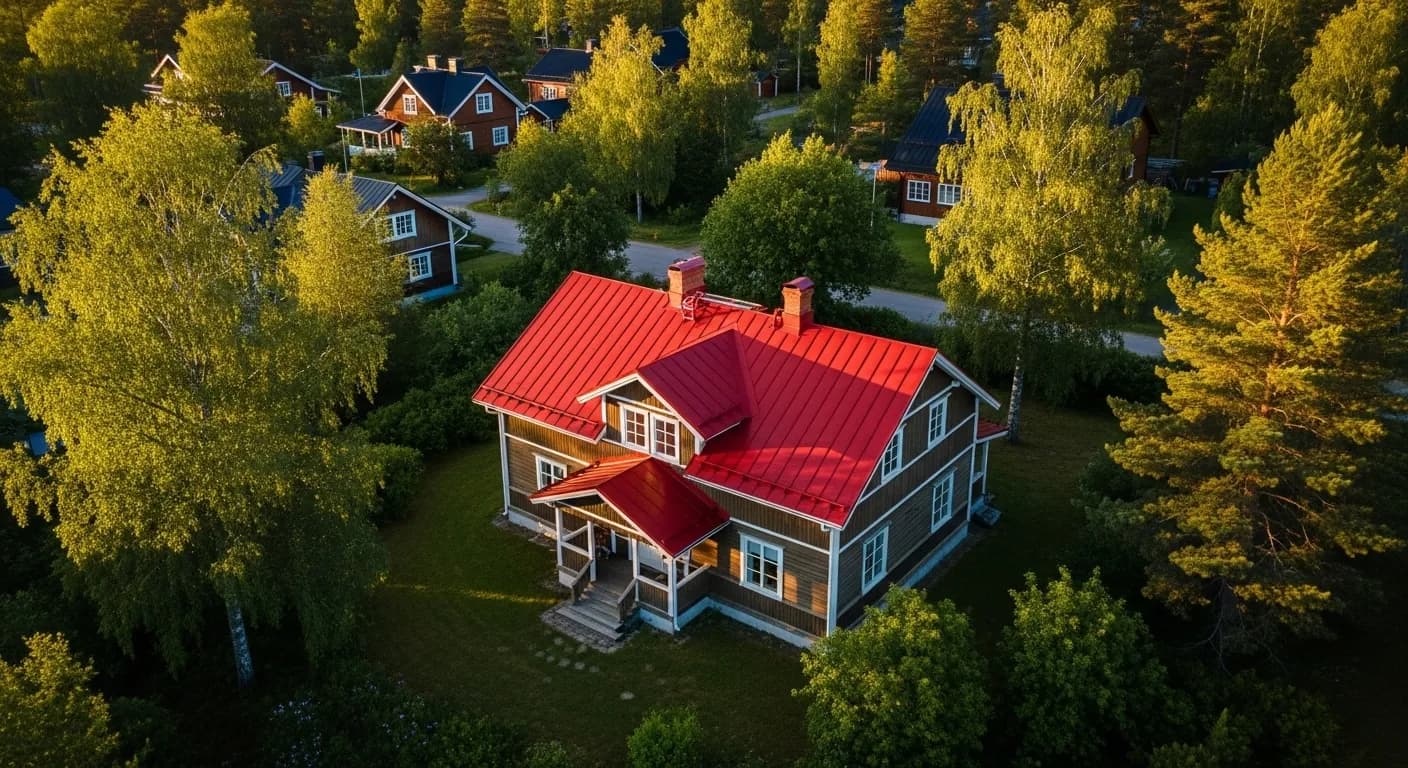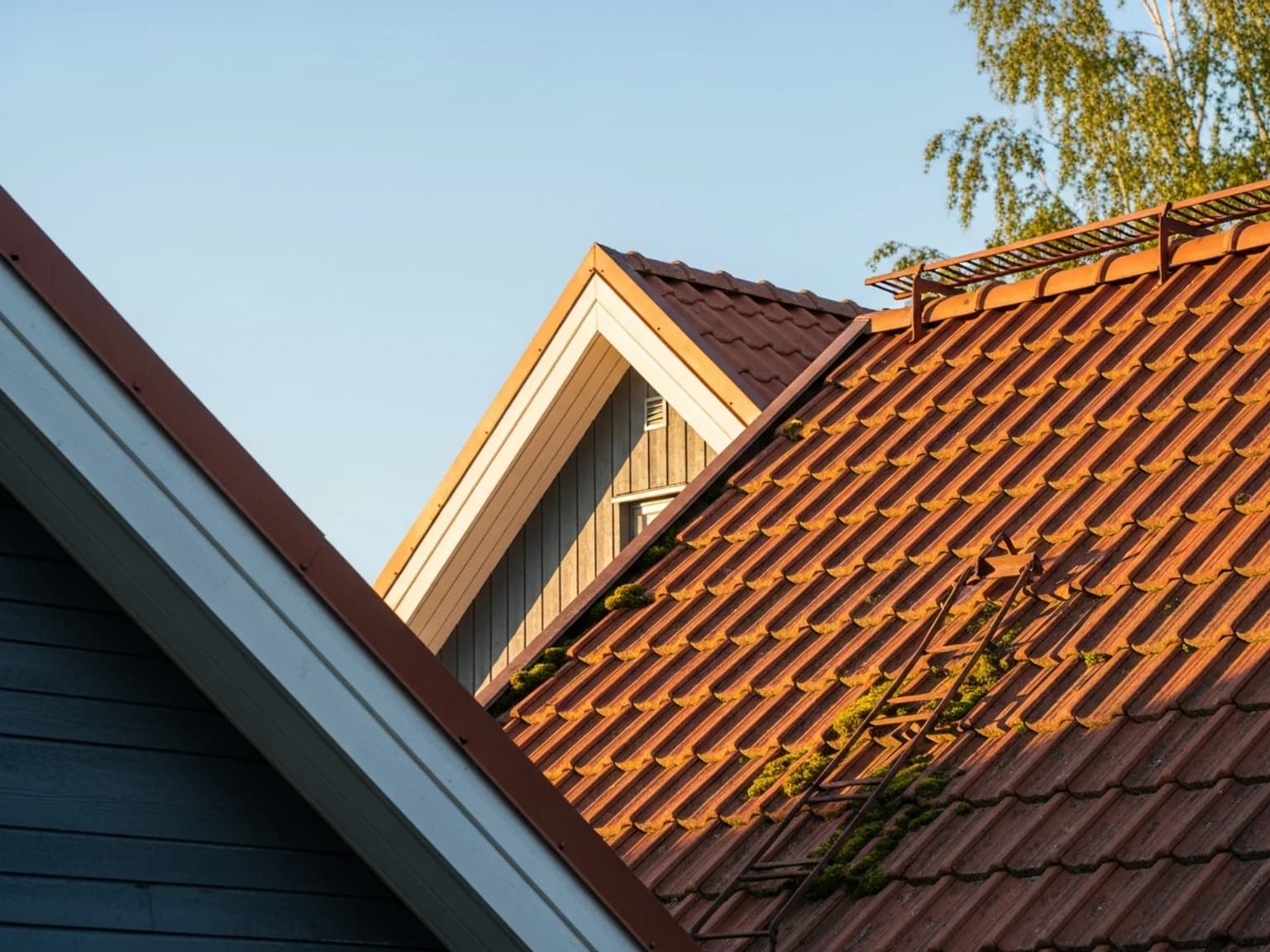
A tile roof is one of the oldest and most prestigious roofing materials in the world. In Finland, tile roofs have a long tradition, particularly in urban areas and historical buildings. Roofing tiles are made from fired clay, which is a natural and ecological material. A tile roof offers excellent weather resistance and a long service life — a properly installed tile roof can last 50–100 years. Tiles withstand UV radiation, frost and mechanical stress excellently. On the other hand, the weight of tiles (40–60 kg/m²) places demands on the load-bearing structure. Modern roofing tiles are either concrete tiles or clay tiles. Concrete tiles are cheaper, but clay tiles retain their colour better and do not become as easily covered with moss. In Finland, concrete tiles are the most popular because they are significantly cheaper and almost as long-lasting as clay tiles.
Tile types and their properties
Roofing tiles are divided into concrete tiles and clay tiles. Concrete tiles are manufactured from a mixture of cement, sand and water; they are affordable but heavier. Clay tiles, on the other hand, are fired at approximately 1,000 degrees, at which point the minerals in the clay mass sinter, making the tile extremely hard and weather-resistant.
There are several tile profiles: the standard profile (S-shaped), the flat profile and the wave profile. The standard profile is the most common and easiest to install, as it locks tightly through overlapping. The flat profile is more modern and popular in architectural projects.
Colour options are abundant — red, black, grey and brown are the most popular. In concrete tiles, the colour is a surface coating that may fade over time. In clay tiles, the colour runs through the entire mass, so it does not fade. Engobe and glaze surface treatments add extra durability and aesthetics to clay tiles.
Installation and requirements
Tile roof installation requires a sturdier roof structure than, for example, a metal roof, because the weight of tiles is 40–60 kg/m². The structure must be dimensioned to also cover snow load and wind load. When renovating an old building with a tile roof, the load-bearing structure must always be inspected and reinforced if necessary.
Tiles are installed on batten lathing. The batten spacing is determined by the tile model — typically 320–340 mm. Roofing underlayment is mandatory in Finnish conditions. The purpose of the underlayment is to direct any water that may penetrate between the tiles away from the structures.
At the ridge, eaves and penetrations, special tiles and flashings are used. Ridge tiles are secured with mortar or mechanical fasteners. Penetration sealings are critical points — carelessly executed chimney flashing is the most common cause of leaks in tile roofs.
Maintenance and repair
Tile roof maintenance is minimal but important. Annual inspections check tile integrity, ridge cap attachment, eaves condition and penetration tightness. Broken tiles are replaced individually, which makes repairs cost-effective.
Moss growth is the most common aesthetic problem with tile roofs. On concrete tile roofs, moss grows particularly on shaded sides as early as 10–15 years of age. Moss removal involves mechanical cleaning and biocide treatment. Pressure washers are not recommended, as they can damage the tile surface and shorten the service life.
During the tile roof's lifecycle, the largest single maintenance task is usually replacing the underlayment at approximately 30–40 years of age. At this point, the tiles are removed, the underlayment and battens are renewed, and intact tiles are reinstalled. This is considerably more affordable than replacing the entire roof.
Tile roof as an investment
The price of a tile roof installed is approximately 50–90€/m², which makes it more expensive than a metal roof but competitive in the long term. In terms of lifecycle costs, a tile roof is economical, as it requires less maintenance and lasts longer.
A tile roof increases property value, particularly in urban areas where the aesthetics of tile roofs are valued. Insurance companies generally classify tile roofs as a good roof type, which may have an impact on insurance premiums.
The recyclability of tile roofs is excellent — used tiles can be crushed and used in earth construction. Clay tiles can also be reused as they are. In terms of energy efficiency, the thermal mass of a tile roof evens out temperature differences, which reduces upper-floor heat in summer.
Related terms
Want to learn more?
Read the full guide on this topic→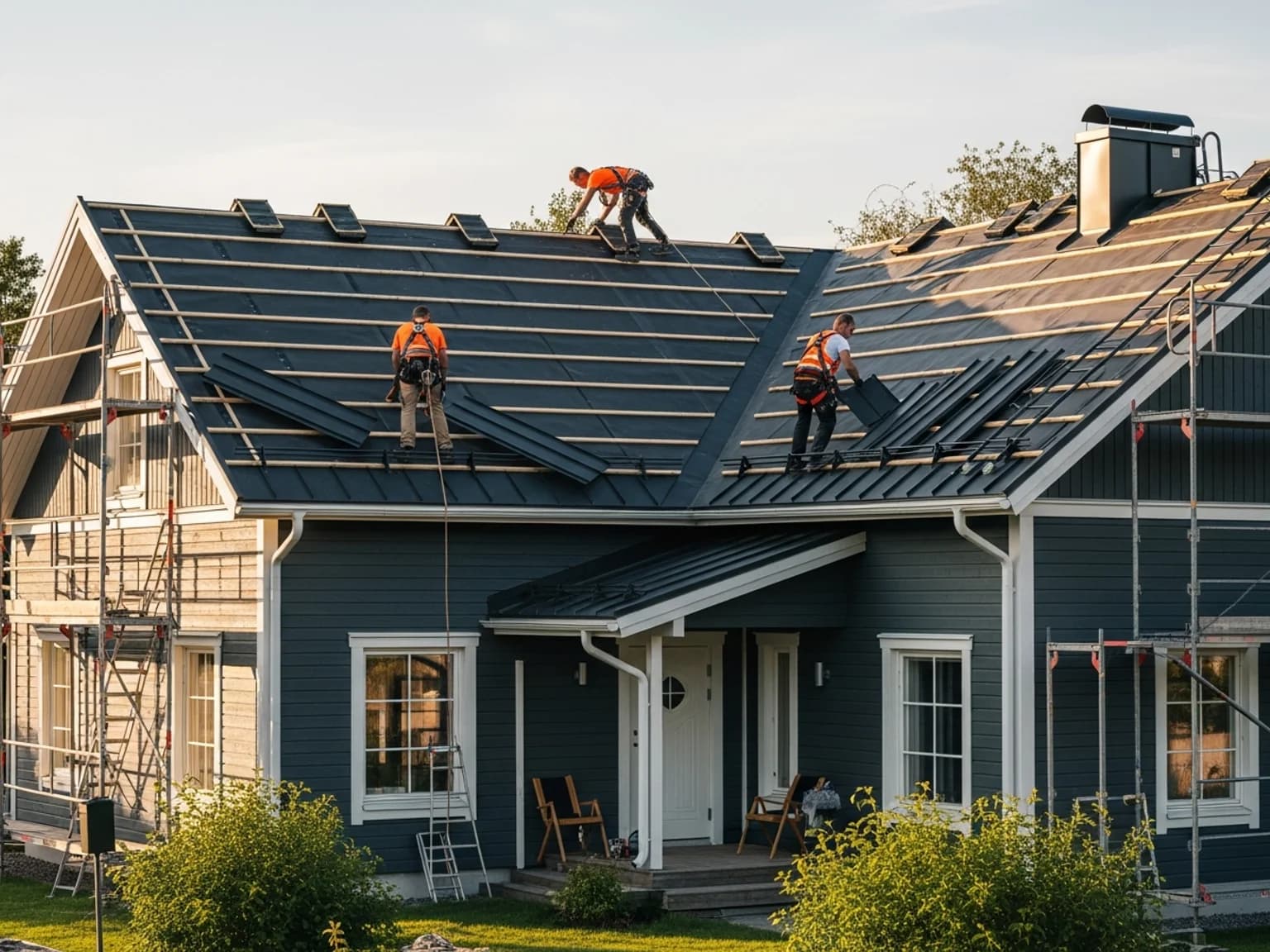
Request a roofing quote and enter a draw for a €1,000 gift card!
Submit a quote request — you're automatically entered. Winner drawn on 30 June 2026.
€1,000 gift card
Valid for all our roofing services
All quote requests are automatically entered. Rules: kotikatto.fi/arvonta
Content reviewed and verified
Updated: April 2026