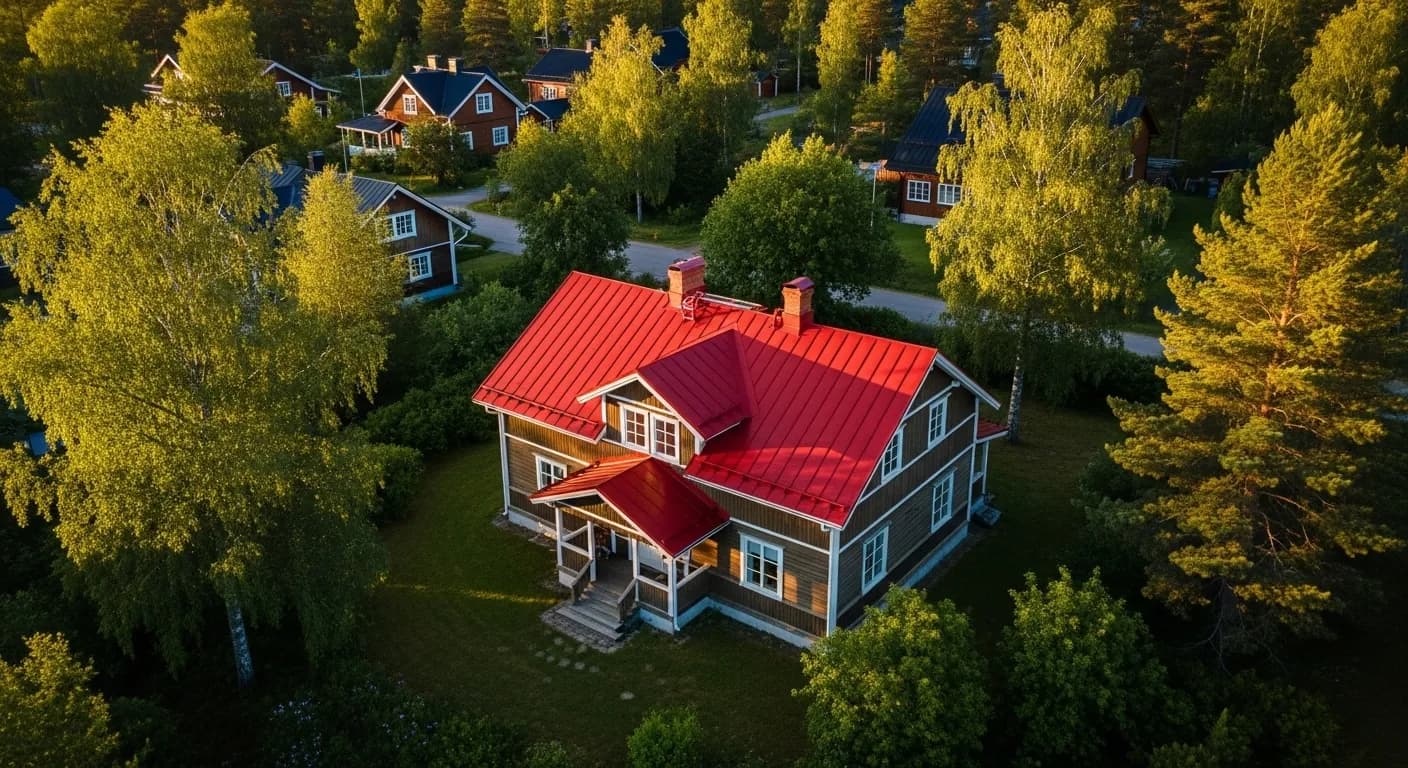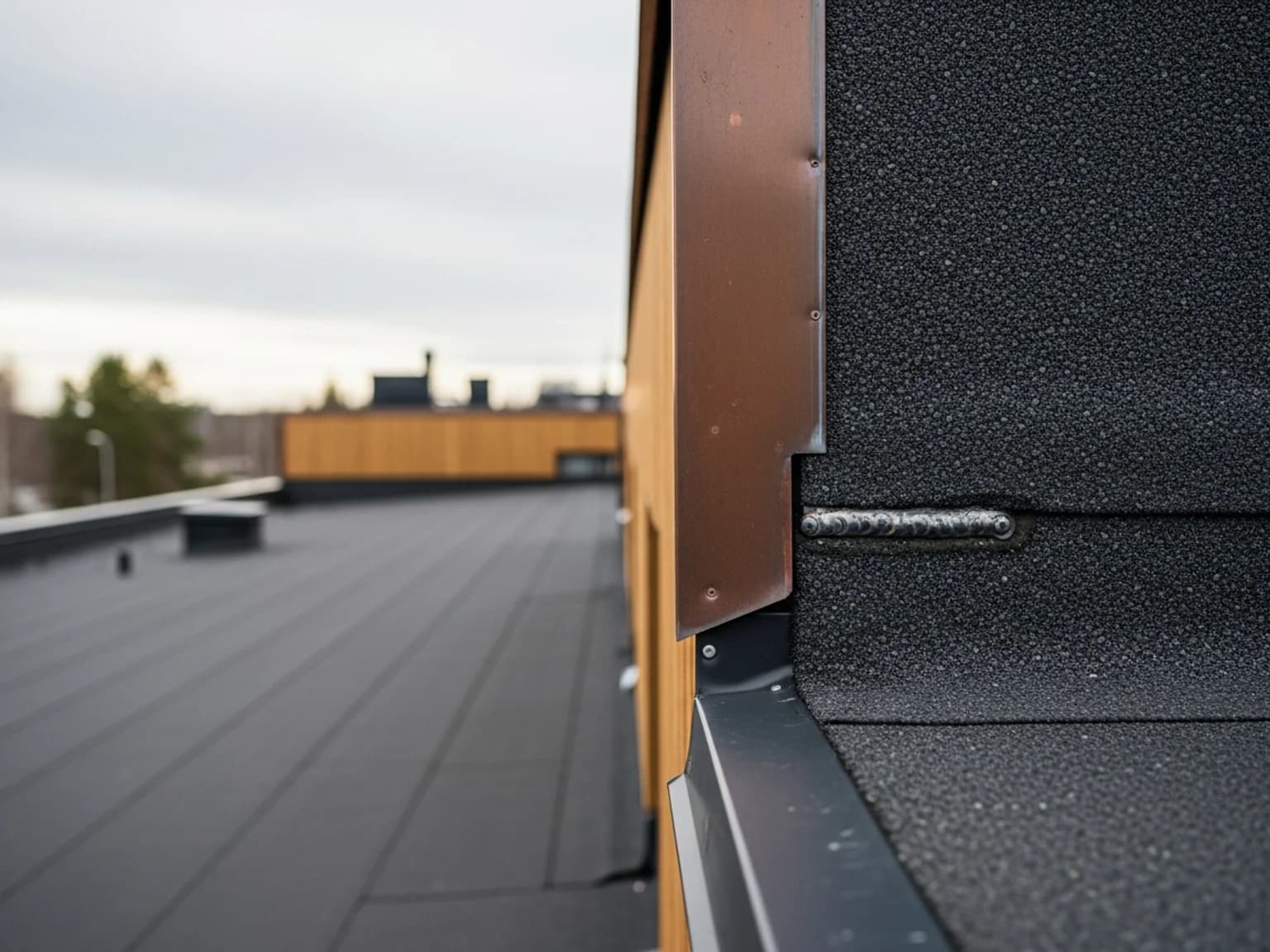
A felt roof, or bitumen membrane, is Finland's second most common roofing material after metal roofs. It is particularly popular on flat roofs, low-pitched roofs and large properties such as apartment buildings, schools and industrial buildings. The advantage of a felt roof is its seamless and waterproof surface, which can withstand even standing water. A modern felt roof differs significantly from old tar-paper roofs. Contemporary bitumen membrane roofs are made from modified SBS or APP bitumen, which is flexible and withstands Finland's severe frost (-35°C) without cracking. The reinforcement layer of the membranes is fibreglass or polyester, which gives the material its strength and dimensional stability. Felt roof installation is professional work, as the bitumen membrane is torch-welded with a propane flame. The quality of installation determines the roof's service life — a carefully executed two-layer membrane system lasts 25–35 years.
Types of felt roofs
Felt roofs are divided into single-layer and multi-layer membrane systems. On flat roofs, a two-layer system is generally used, in which the base membrane is welded onto the substrate and the cap membrane is welded onto the base membrane. This provides the best waterproofing and mechanical durability.
SBS-modified bitumen (styrene-butadiene-styrene) is the most common choice in Finland because it remains flexible in severe frost. APP-modified bitumen withstands UV radiation better but is stiffer in the cold. In northern Finland, SBS is practically the only option.
The cap membrane typically has a mineral granule surface that protects the bitumen from UV radiation and mechanical stress. The granule colour can be grey, red or green. In more expensive systems, copper or aluminium foil membranes are used, which last exceptionally long.
Installation and substrate requirements
A felt roof is installed either on a wooden substrate, a concrete substrate or on top of an old membrane. A wooden substrate is typically tongue-and-groove boarding or plywood. On a concrete substrate, the membrane can also be fastened mechanically or glued with bitumen adhesive.
Torch-welding installation requires professional skill and a hot-work permit. The membrane is unrolled and its underside is melted with a flame, causing the bitumen to adhere to the substrate. Seam overlap is at least 100 mm laterally and 150 mm at the ends. Seam joints are critical points of the roof.
Slopes are essential on flat roofs — the minimum pitch is 1:80 (approximately 0.7°) for a membrane roof. Water must not remain standing on the roof for extended periods, even though the membrane can withstand occasional puddles. Slopes are usually created in the insulation layer using tapered insulation boards or wedge-shaped insulation.
Maintenance and service life
The service life of a felt roof is typically 20–35 years depending on membrane quality and maintenance. Regular inspection in spring and autumn is recommended. Inspections cover membrane seams, penetrations, eaves structures and the functioning of water drainage.
The most common types of damage are seam opening, blister formation and mechanical punctures. Minor damage is repaired with membrane patches welded over the damaged area. More extensive damage may necessitate replacing the entire membrane surface.
Critical risk areas on flat roofs include penetrations (ventilation ducts, sewer vents), the surroundings of roof drains and upstands at wall junctions. Inspecting these points is the single most important maintenance task. Cleaning roof drains of leaves and debris prevents water accumulation on the roof.
Costs and energy efficiency
The price of a felt roof installed is approximately 30–60€/m² depending on the membrane quality and the condition of the substrate. A two-layer system is more expensive but more durable than a single-layer covering. Renewing the flat roof insulation at the same time increases the total cost but significantly improves energy efficiency.
In terms of energy efficiency, flat roof insulation is a critical factor. In old apartment buildings, adding insulation to the flat roof during a membrane renovation is a cost-effective way to improve the building's energy efficiency. Typically, the insulation thickness is increased by 50–150 mm.
The lifecycle cost of a felt roof is competitive compared to other flat roof alternatives. TPO and PVC roofing membranes are becoming more common, but bitumen membrane maintains its position as a reliable solution that is well-known to professionals.
Related terms
Want to learn more?
Read the full guide on this topic→
Request a roofing quote and enter a draw for a €1,000 gift card!
Submit a quote request — you're automatically entered. Winner drawn on 30 June 2026.
€1,000 gift card
Valid for all our roofing services
All quote requests are automatically entered. Rules: kotikatto.fi/arvonta
Content reviewed and verified
Updated: April 2026