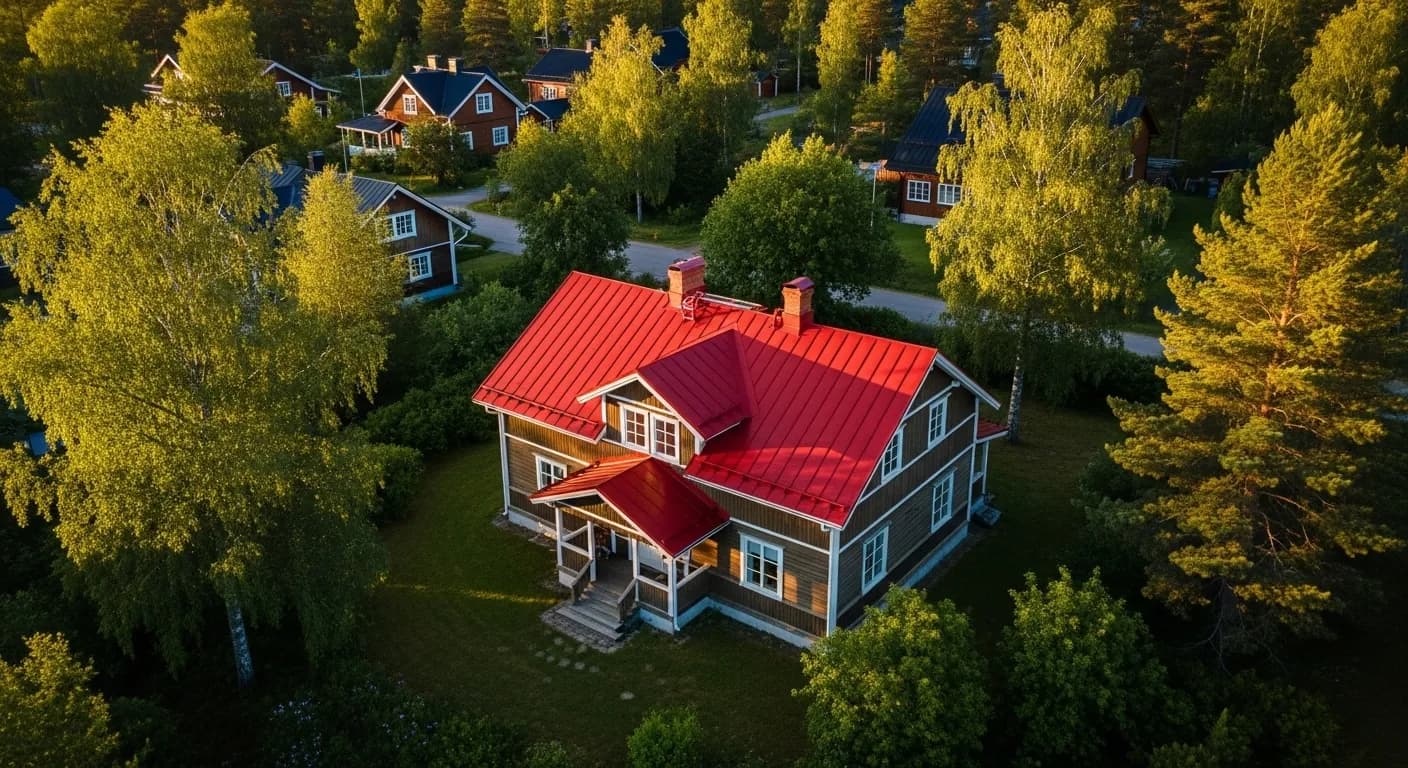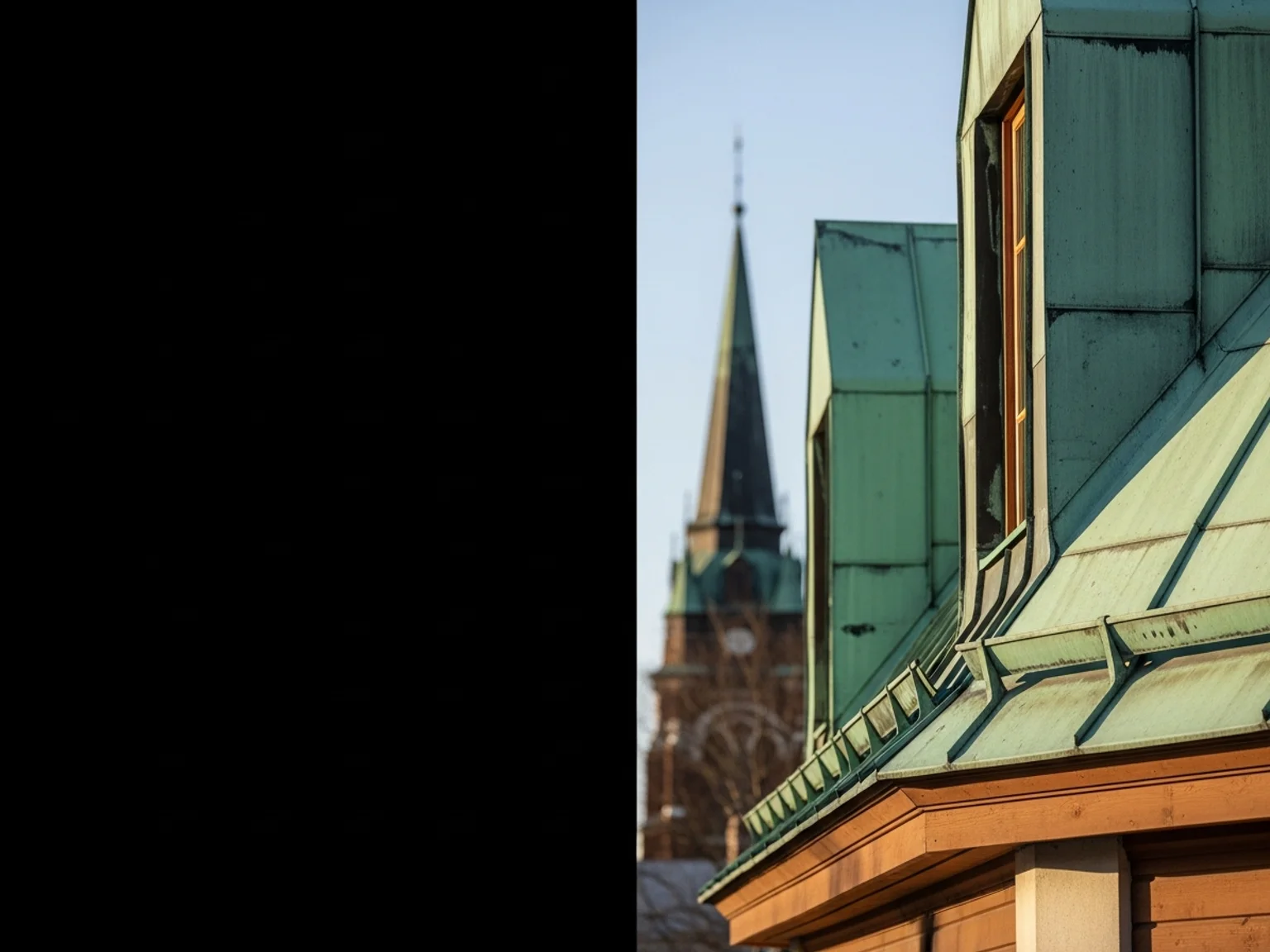
A copper roof is the most prestigious and longest-lasting metallic roofing material. In Finland, copper roofs are common on historic buildings, churches, and public buildings, but copper roofing is also a sought-after solution for demanding detached house projects. Copper's natural property is to form a protective patina on its surface, making the roof virtually maintenance-free for decades. The raw material for copper roofing is rolled copper sheet, typically 0.6–0.7 mm thick. The material is one hundred percent recyclable, making it an environmentally friendly choice in the long term. However, the price of copper is many times higher than that of steel sheet — the installed cost per square metre ranges from 150–300€/m² depending on the complexity of the project. Copper roofing is almost always installed using the standing seam technique, where the edges of the sheets are folded and mechanically pressed into a tight seam. Installation requires specialised expertise and the use of materials compatible with copper, as copper causes electrochemical corrosion when in contact with certain metals such as aluminium or galvanised steel.
Patination and appearance of copper
A copper roof is recognised by its colour that changes over time. A new copper roof is a shiny reddish-gold colour but darkens to brown within a few months as it oxidises. Over approximately 10–20 years, a green patina (copper carbonate) forms on the surface of the copper, a familiar sight on old church roofs.
The patina layer is the most important protective mechanism of a copper roof. It prevents the underlying copper from corroding and makes the roof virtually eternal — well-known copper roofs in the Nordic countries have lasted over 300 years. The rate of patina formation depends on climate conditions: in maritime climates and polluted areas, the patina develops faster.
If a uniform green patina is desired immediately after installation, factory pre-patinated copper sheets are available. Their price is approximately 10–20% higher than untreated copper. Similarly, tinned copper is available, which retains a silver-coloured surface and does not develop a green patina.
Installation and technical requirements
A copper roof is installed using the standing seam technique on solid board decking. Below the decking is a ventilation gap and underlay membrane according to standard roof structure practice. The seams of the copper sheets are either single or double standing seams — a double seam is more watertight and is recommended for lower pitches.
Fixing is done with clips (clamps) that allow the copper to expand and contract freely with temperature changes. Copper has a high coefficient of thermal expansion — a 6-metre-long sheet moves approximately 5 mm when the temperature changes by 50 degrees. If there is no allowance for movement, the sheet will buckle or the seams will tear.
A critical design rule is the prevention of galvanic corrosion. Aluminium, galvanised steel, or zinc must not come into contact with copper. Rainwater from the copper surface also corrodes zinc-coated surfaces below, so downpipes and gutters must be made of copper or stainless steel. The RT 85-10767 instruction card provides detailed guidelines for the design of copper roofing.
Durability and maintenance
The service life of a copper roof is 100–200 years, making it by far the longest-lasting roofing option. In practice, a copper roof lasts for the entire lifecycle of the building without needing material replacement. Maintenance requirements are extremely low — the patinated surface does not require painting or coating.
An annual visual inspection and clearing debris from gutters are sufficient as normal maintenance. Any mechanical damage, such as dents from falling trees, is repaired by soldering or with a patch sheet. Soldering copper is specialist work that requires an installer experienced in copper roofing.
From an environmental perspective, a copper roof is an excellent choice. Copper is one hundred percent recyclable, and the value of used copper is significant — at the demolition stage, the material has a recovery value. In lifecycle cost calculations, the annual cost of a copper roof is often lower than that of cheaper roofs, because there is no need for replacement.
Copper roofing in Finnish construction
In Finland, the tradition of copper roofing goes back centuries. Turku Cathedral, Helsinki Cathedral, and numerous manor buildings are the best-known examples. Today, copper roofs are popular especially in architecturally demanding detached house projects and public buildings.
Finland's cold climate suits copper excellently. Copper withstands frost indefinitely and does not become brittle like plastic or bitumen. Snow load is not a problem, as a copper roof is lightweight (approximately 7 kg/m²) and its smooth surface allows snow to slide off. However, snow guards are mandatory.
In terms of cost, a copper roof is by far the most expensive option — 150–300€/m² installed. The price is affected by the world market price of copper, the complexity of the project, and the number of details. As an investment, a copper roof significantly increases the property's value and is considered a premium roofing material by insurance companies. In conjunction with energy renovations, a copper roof can be a sensible choice when the roof needs to be done only once.
Related terms
Want to learn more?
Read the full guide on this topic→
Request a roofing quote and enter a draw for a €1,000 gift card!
Submit a quote request — you're automatically entered. Winner drawn on 30 June 2026.
€1,000 gift card
Valid for all our roofing services
All quote requests are automatically entered. Rules: kotikatto.fi/arvonta
Content reviewed and verified
Updated: April 2026