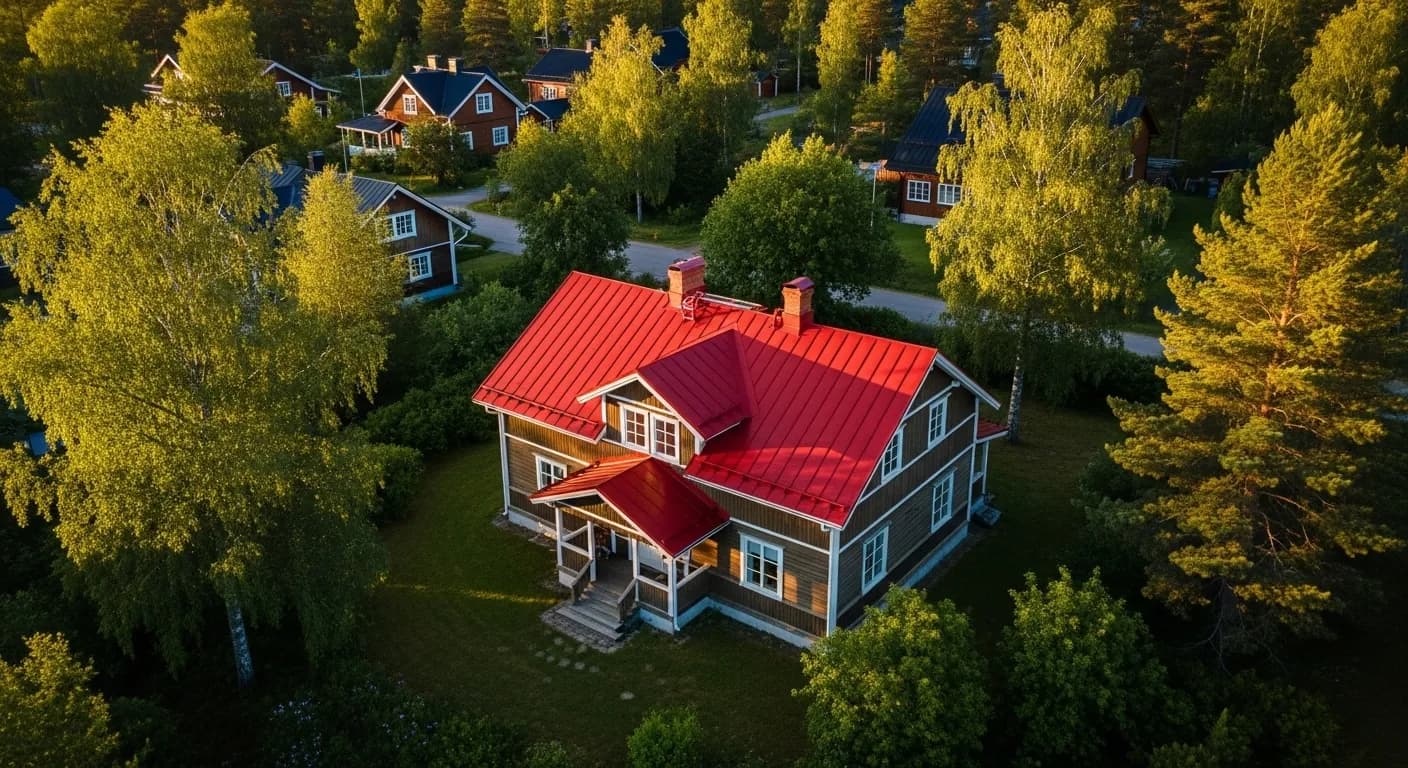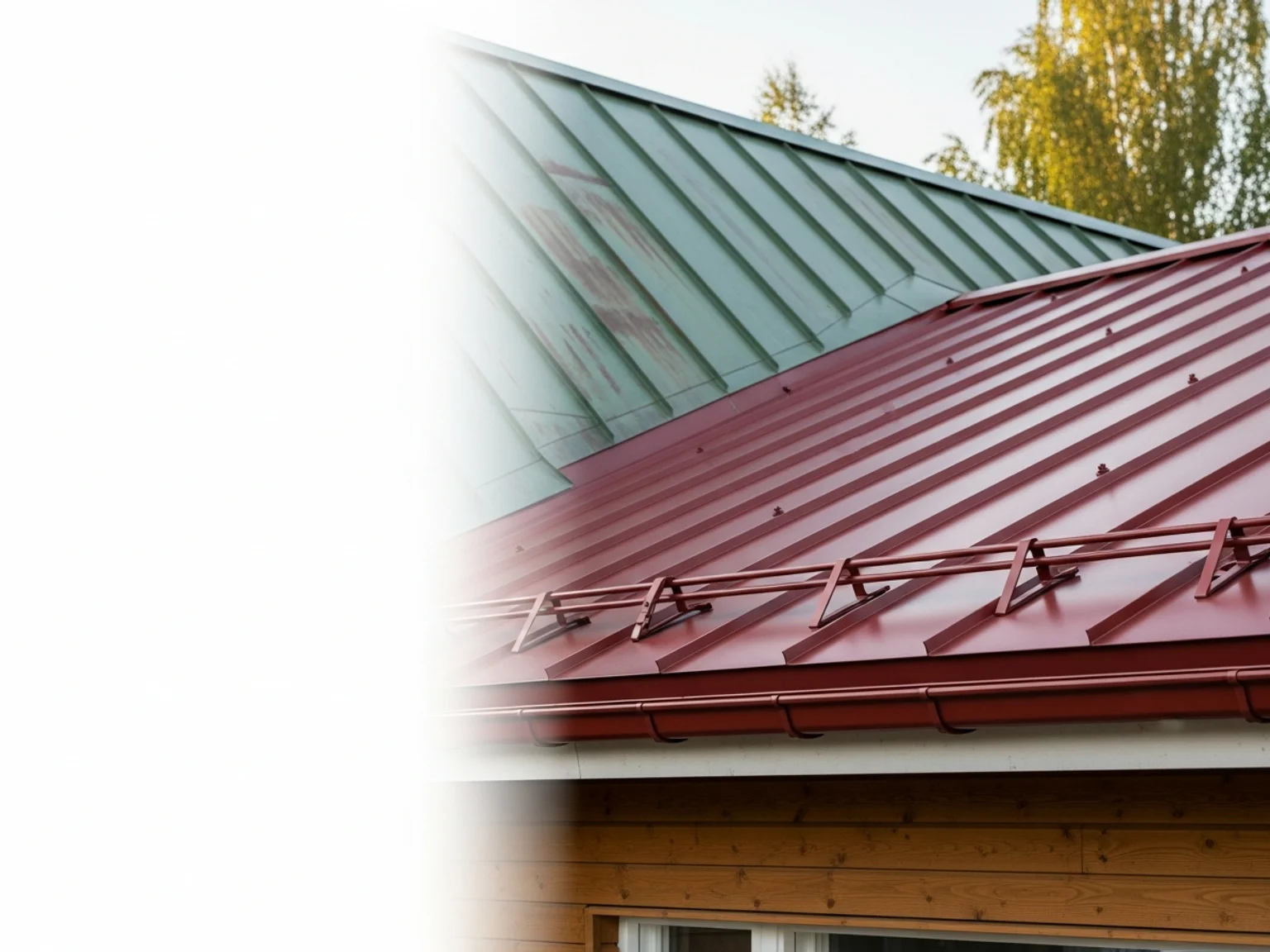
A profiled metal roof is Finland's most popular roof type and the most common form of metal roofing. Profiled sheet metal refers to a metal sheet into which a repeating wave-like or trapezoidal pattern has been roll-formed. The profile gives the thin metal sheet mechanical rigidity and strength, enabling it to better withstand wind and snow loads compared to a flat sheet. A profiled metal roof is affordable and quick to install, which explains its enormous popularity. The installed price per square metre ranges from 30–50€/m² depending on the profile, coating, and complexity of the project. It is suitable for virtually all building types from detached houses to industrial halls, and for roof pitches from approximately 8 degrees upwards. Compared to a standing seam roof, a profiled metal roof is more affordable but aesthetically coarser. A standing seam roof has a smooth surface and tighter seams, while in a profiled metal roof the profile and fixing screws are visible on the surface. Nevertheless, many consider a profiled metal roof to be sufficiently neat and a functionally excellent solution that serves for decades when correctly installed.
Profile types and materials
Profiled metal roofs are divided by profile shape into two main groups: wave profile and trapezoidal profile. Wave profile (e.g. wave 18/76 or 20/100) is the more traditional form, where the sheet surface undulates evenly. Trapezoidal profile (e.g. T35 or T45) is a more modern form where the crests and troughs of the profile have sharp edges — it gives the sheet greater rigidity and is also suitable for wall cladding.
The material used is hot-dip galvanised steel sheet, typically 0.5–0.6 mm thick. The zinc layer (usually 275 g/m²) protects the steel from corrosion. On top comes an organic coating — polyester is the most affordable and common, PVDF and PVC are more expensive but significantly more durable.
The colour range of profiled sheet metal is wide and generally follows the RR colour chart shades. The most popular roof colours are RR32 (dark brown), RR33 (black), RR29 (red), and RR23 (dark grey). Municipal planning regulations may restrict permitted colours, so this should be checked before ordering.
Installation and fixing
The installation of a profiled metal roof begins with laying the underlay membrane over the roof trusses. The underlay membrane is fixed with battens, and roof battens are installed on top of the counter-battens perpendicular to the roof slope direction. The batten spacing depends on the profile type and the sheet's fixing instructions — typically c/c 300–400 mm.
The metal sheets are installed from the eaves towards the ridge. Sheets overlap by one wave in the lateral direction and by at least 150–200 mm in the longitudinal direction. Fixing is done with self-drilling screws that have an EPDM rubber sealing washer. Typically 6–8 screws/m² are needed, and they are fixed into the bottom of the profile, i.e. the trough — this is currently the most common and recommended method in Finland.
Penetrations, ridge flashings, and eaves flashings are critical details. Every penetration requires a ready-made or custom-formed penetration collar that is carefully sealed. A ridge seal is installed under the ridge flashing to prevent snow and water from penetrating while still allowing air ventilation. RT 85-11163 and the roofing manufacturers' instructions define the detailed installation methods.
Durability and maintenance
The service life of a profiled metal roof depends heavily on the coating quality. With a basic polyester coating, the roof maintains its appearance for approximately 20–30 years, after which the colour begins to fade and the coating becomes brittle. With PVDF and PVC coatings, the service life extends to 40–50 years. The steel sheet itself, protected by the zinc layer, lasts significantly longer than the coating.
Annual maintenance involves removing debris and leaves from gutters, visually inspecting the metal roofing, and checking the condition of the screw sealing washers. Ageing of EPDM rubber seals is a common cause of leaks — the maintenance programme should include seal inspection after 10 years.
Maintenance painting is a cost-effective way to extend the service life of a profiled metal roof. Painting is done with acrylic or polyurethane paint when the original coating begins to fade or flake. The typical time for painting is 15–25 years after installation. A well-done maintenance painting gives the roof a new 10–15 year lifecycle and costs approximately 8–15€/m².
Profiled metal roofing in Finnish conditions
A profiled metal roof has proven to be excellent in Finland's harsh conditions. Its light weight (approximately 4–6 kg/m²) minimises the load on the roof structure, and the sheet's smooth surface reduces snow load — snow slides off profiled metal more easily than from many other roofing materials. For this reason, snow guards are mandatory according to safety regulations.
Sound insulation is the best-known weakness of a profiled metal roof. The sound of rain and hail carries into the interior especially in attic rooms. In modern construction, the problem is solved with sufficient insulation (at least 200–300 mm of mineral wool) and an underlay membrane with good airborne sound insulation values.
Thermal expansion must be taken into account with long sheets. In sheets longer than 6 metres, thermal movement can be several millimetres, which must be considered in the fixing and joints. The profile shape itself provides some flexibility to the sheet in the longitudinal direction, which compensates for part of the movement. However, Finland's large temperature fluctuations (-35°C to +60°C) require strict adherence to the manufacturer's instructions for fixing, to ensure the sheet can move freely and no bulging occurs.
Related terms
Want to learn more?
Read the full guide on this topic→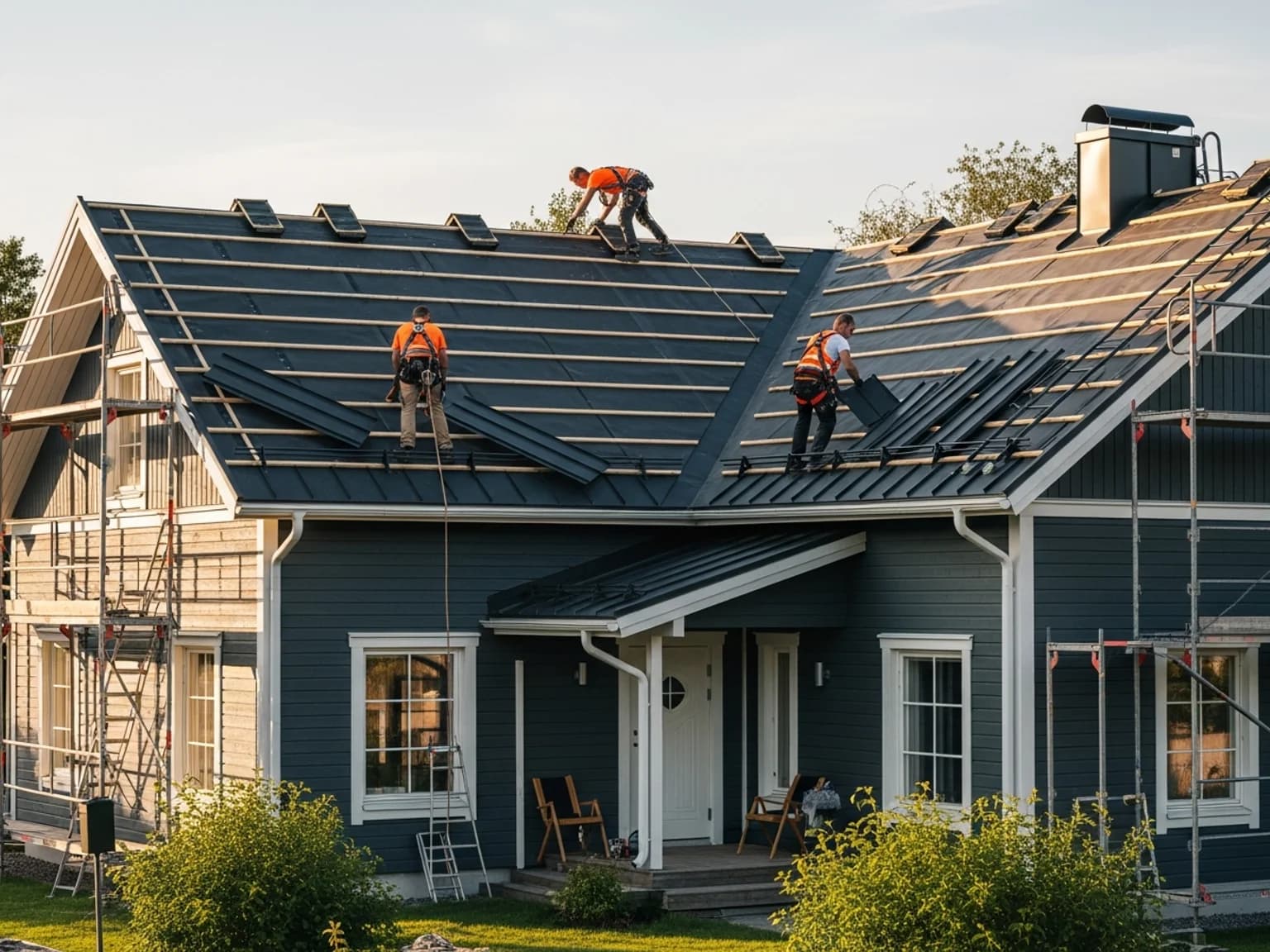
Request a roofing quote and enter a draw for a €1,000 gift card!
Submit a quote request — you're automatically entered. Winner drawn on 30 June 2026.
€1,000 gift card
Valid for all our roofing services
All quote requests are automatically entered. Rules: kotikatto.fi/arvonta
Content reviewed and verified
Updated: April 2026