Roof covering wear is an inevitable process in which roofing material gradually weakens under the effects of weather, UV radiation and mechanical stress. Every roofing material wears — the question is only one of time and conditions. Recognising wear in time enables proactive maintenance and planned roof renovation before leak damage occurs. Finnish conditions are particularly demanding for roofing materials. Extreme temperature swings (-30 °C to +60 °C on the roof surface), UV radiation in summer, repeated freeze-thaw cycles, snow load and rain together create a stress regime that wears all roofing materials. In addition, mechanical stresses — wind-borne debris, ice and snow, and roof maintenance work — wear the covering surface. Roof covering wear typically progresses slowly over many years, and its early signs are often inconspicuous. That is why regular roof inspection is key — a professional can identify the signs of wear at an early stage and recommend timely maintenance measures or a roof renovation.
Wear mechanisms for different roofing materials
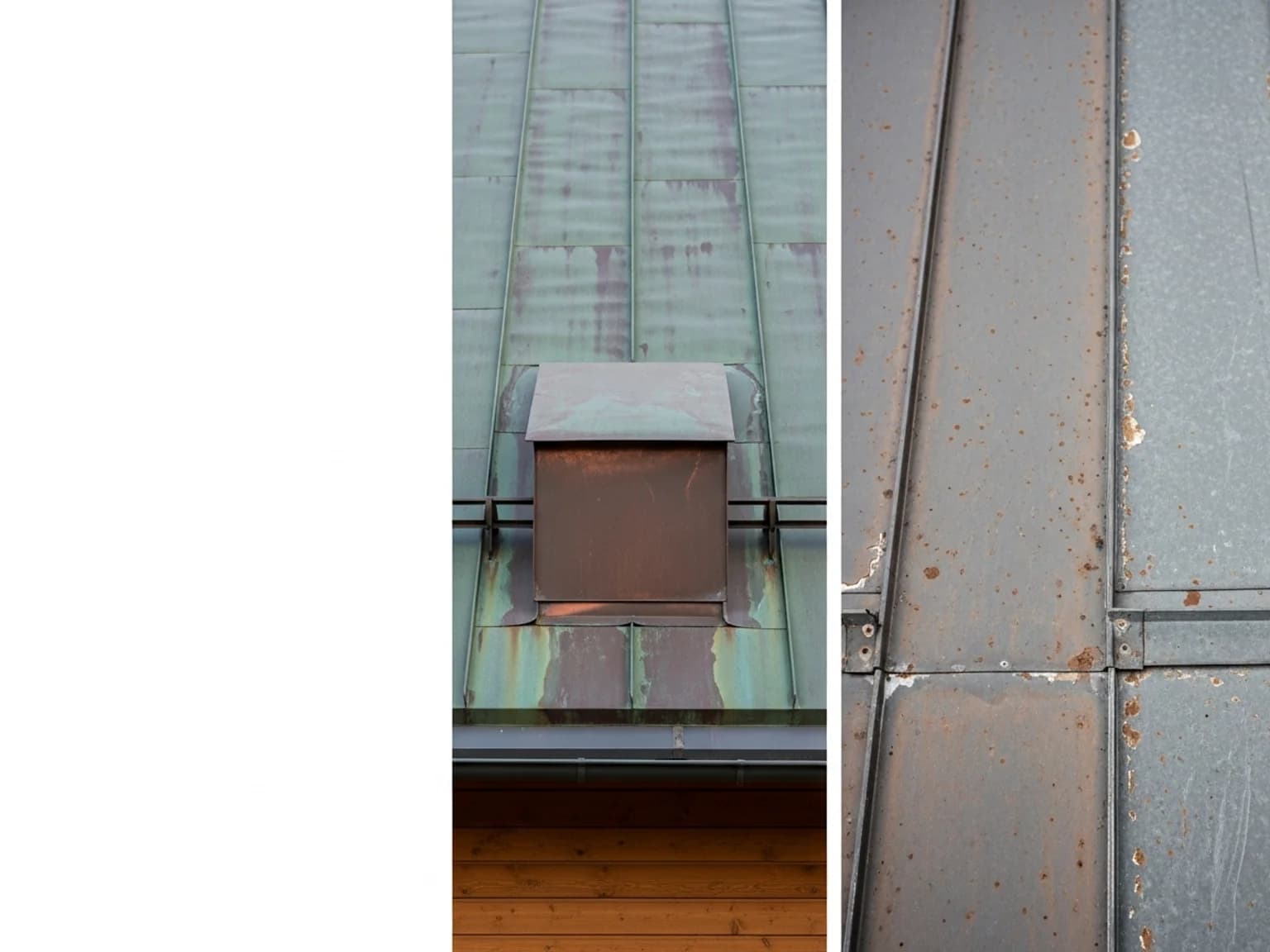
On a metal roof, wear begins with embrittlement of the coating. UV radiation fades the colour and embrittles the polyester coating. At fixing points and edges, where the coating is thinner or damaged, rusting begins. On a standing-seam roof, seam tightness may diminish over decades due to thermal movement.
On an asphalt shingle roof, wear first shows as granule loss. Granules are crushed stone particles embedded in the shingle surface that protect the bitumen base from UV radiation. When granules loosen, the bitumen is exposed to direct UV, which rapidly embrittles and cracks it. Loose granules accumulate in the gutters — this is an easy early warning sign.
On a tile roof, wear manifests as tile deterioration. Frost weathering is the main mechanism: water is absorbed into the tile pores and expands on freezing, breaking the tile structure from within. An old tile that has experienced many freeze-thaw cycles crumbles at the surface and eventually cracks. On a felt roof, UV radiation hardens and embrittles the bitumen, causing the felt to crack and shrink.
Recognising wear
The signs of covering wear vary by material, but common warning signs include: colour fading and unevenness, cracks and gaps, material curling or buckling, loose pieces or granules, and visible rusting on metal components.
On a metal roof, the first signs are colour fading, coating blistering and small-scale rusting. When rust spots appear, the coating has failed and the steel is exposed to moisture. At this stage, maintenance painting is still possible — more advanced rusting requires sheet replacement.
Tile roof deterioration is visible as surface crumbling, cracking of ridge tiles and possible loosening of tiles. Reddish sand accumulating in the gutters is a sign of tile deterioration. On an asphalt shingle roof, granule loss exposes the dark bitumen base — the shingle surface looks bare and glossy. Shingle edges curl and harden.
Regular roof inspection — preferably by a professional — is the only way to detect wear in time. The recommended inspection interval is 1–2 years, carried out in spring after winter.
Extending the roof's service life
Regular maintenance extends the roof's service life significantly. Metal roof maintenance painting every 15–25 years renews the coating protection and can add 10–20 years of service life. Painting costs approximately 8–15 euros per square metre, whereas replacing the entire roof is 35–65 euros per square metre.
Removing debris and moss from the roof surface reduces moisture stress and biological corrosion. Cleaning gutters prevents water from backing up. Prompt repair of minor damage — cracks, loose tiles, broken shingles — prevents the problem from spreading.
Ensuring attic ventilation is an indirect but effective way to extend covering life. Effective ventilation dries the roof deck, reduces condensation formation and evens out roof surface temperature, reducing thermal-movement stress. The RT guideline cards provide material-specific maintenance programmes that, when followed, allow the roof to achieve the manufacturer's stated service life values.
Roof renovation timing and condition assessment
The right time for a roof renovation is when covering wear has progressed to the point where the leak risk increases or maintenance costs exceed the renovation cost over the long term. A premature renovation is an unnecessary expense, but a delayed renovation leads to leak damage that can multiply costs.
A professional condition assessment is the best way to evaluate the remaining service life of the roof. The assessment inspects the covering material condition, underlayment state, flashing and sealant condition, eaves structure and attic ventilation. Based on the assessment, a maintenance plan is drawn up specifying the required maintenance measures and estimated renovation date.
For cost planning, it is useful to know the typical service lives of different roofing materials: metal sheet 40–60 years, standing-seam 50–70 years, concrete tile 40–60 years, asphalt shingle 20–35 years and felt 15–30 years. These are indicative values — actual service life depends on installation quality, conditions and maintenance level.
Related terms
Want to learn more?
Read the full guide on this topic→
Request a roofing quote and enter a draw for a €1,000 gift card!
Submit a quote request — you're automatically entered. Winner drawn on 30 June 2026.
€1,000 gift card
Valid for all our roofing services
All quote requests are automatically entered. Rules: kotikatto.fi/arvonta
Content reviewed and verified
Updated: April 2026