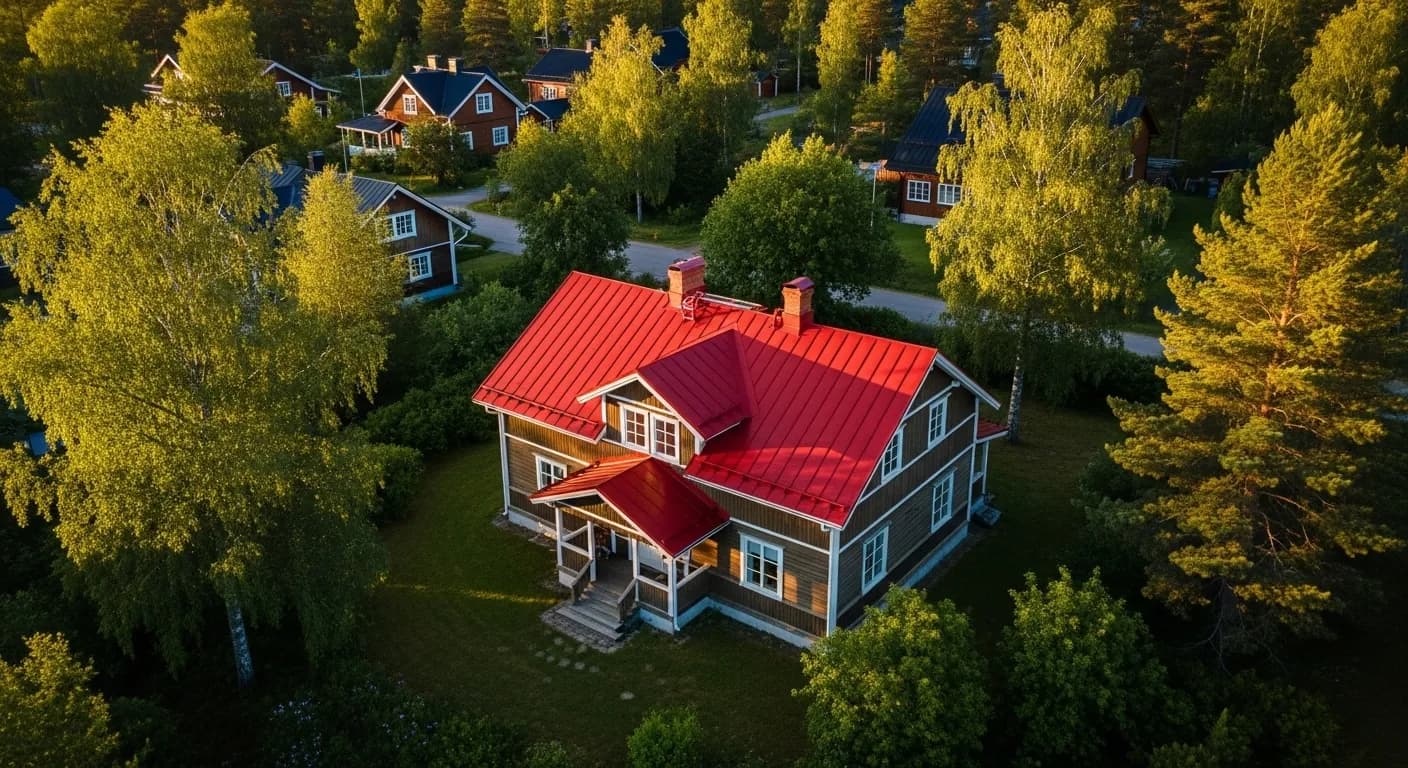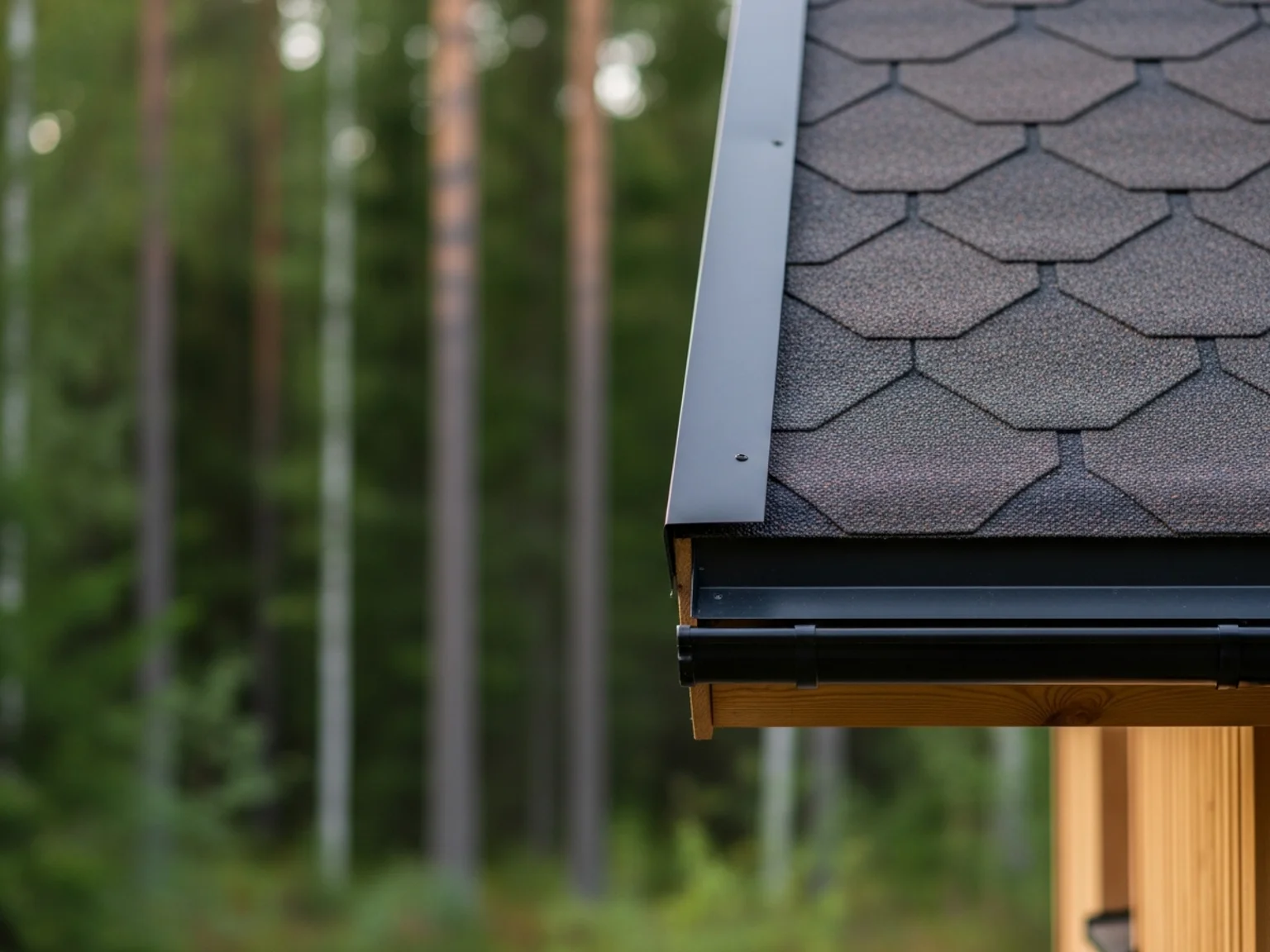
A bitumen shingle is related to bitumen membrane, but it is installed as individual pieces — shingles — overlapping on the roof surface. A shingle roof is popular particularly on detached houses, holiday homes and outbuildings. It combines a reasonable price, easy installation and an attractive appearance. A bitumen shingle is manufactured from a fibreglass-reinforced bitumen sheet with coloured mineral granules bonded to its surface. Shingles come in several shapes — rectangular, hexagonal, wave pattern — and the colour range is extensive. In appearance, a bitumen shingle roof resembles a traditional tile or slate roof at a fraction of the cost. Bitumen shingle installation is simpler than membrane roofing but still requires careful workmanship. The correct overlap of shingles, nailing points and details determine the roof's durability. In Finland, bitumen shingle roofs are particularly popular on summer cottages and wooden-house neighbourhoods.
Shingle types and properties
Bitumen shingles are manufactured in several profiles. Traditional three-tab shingles are the most affordable, while laminated shingles (multi-layer shingles) are thicker, more durable and give the roof a three-dimensional appearance. Laminated shingles have a service life of approximately 30–40 years, compared to 20–25 years for basic shingles.
The bitumen quality of shingles varies — the best use SBS-modified bitumen, which remains flexible in frost. Cheaper shingles use oxidised bitumen, which becomes brittle more quickly. In Finnish conditions, SBS shingles should be chosen.
The mineral granule coating gives the shingle UV protection and mechanical durability. The granules are usually ceramic granulate with colour fired into the material. High-quality granules do not detach or fade. On cheaper shingles, granules may come loose after only a few years of use.
Installation requirements
A bitumen shingle roof requires solid deck boarding or a plywood substrate — batten lathing is not sufficient. Typically, 18 mm softwood plywood or tongue-and-groove boarding is used as the substrate. An underlayment membrane is installed on top of the substrate to protect the structure from any water that may travel beneath the shingles.
The minimum pitch for a shingle roof is approximately 1:5 (11°), but the recommended minimum pitch is 1:3 (18°). On lower pitches, water flow is slower and the risk of leaks increases. On steep roofs (over 60°), shingles must be secured with additional nailing or adhesive.
Shingle installation is an overlap system: each row of shingles covers the nailing points of the row below. Standard nailing is 4 nails per shingle — in windy areas, 6 nails are used. The nails must be driven by a nail gun to the correct spot in the shingle's marked nailing zone.
Durability in Finnish climate
Finland's harsh winter conditions place significant stress on bitumen shingle roofs. Frost makes bitumen brittle, icicles and freeze-thaw cycles can lift shingle edges, and snow load presses on the roof surface. SBS-modified shingles withstand these stresses significantly better than oxidised ones.
Wind is the greatest enemy of a bitumen shingle roof. In strong wind, shingle edges can lift and in the worst case entire shingles can tear off. The nailing density and self-adhesion of the installation determine wind resistance. High-quality shingles have a self-adhesive bitumen strip on the underside that activates in sunlight and bonds the shingle to the layer below.
The orientation of the roof affects shingle durability: south- and south-west-facing slopes are exposed to more UV radiation and temperature fluctuations, which accelerates ageing. On north-facing slopes, moss and lichen are more common problems.
Price and comparison with other materials
The price of a bitumen shingle roof installed is approximately 25–50€/m², making it one of the most affordable roofing materials. The material cost alone is only approximately 8–15€/m². Solid deck boarding increases the total cost compared to a metal roof, which is installed on battens.
Compared to a metal roof, a bitumen shingle roof is quieter in rain and more aesthetically pleasing in many settings. However, its service life is shorter (20–35 years vs. 40–60 years) and it requires more maintenance. In terms of lifecycle costs, a metal roof is generally more affordable.
A bitumen shingle roof is an excellent choice for holiday homes, outbuildings and detached houses where an attractive appearance is desired at an affordable price. It is also a good option for complex roof surfaces with many penetrations and corners — cutting a shingle is easier than cutting sheet metal.
Related terms
Want to learn more?
Read the full guide on this topic→
Request a roofing quote and enter a draw for a €1,000 gift card!
Submit a quote request — you're automatically entered. Winner drawn on 30 June 2026.
€1,000 gift card
Valid for all our roofing services
All quote requests are automatically entered. Rules: kotikatto.fi/arvonta
Content reviewed and verified
Updated: April 2026