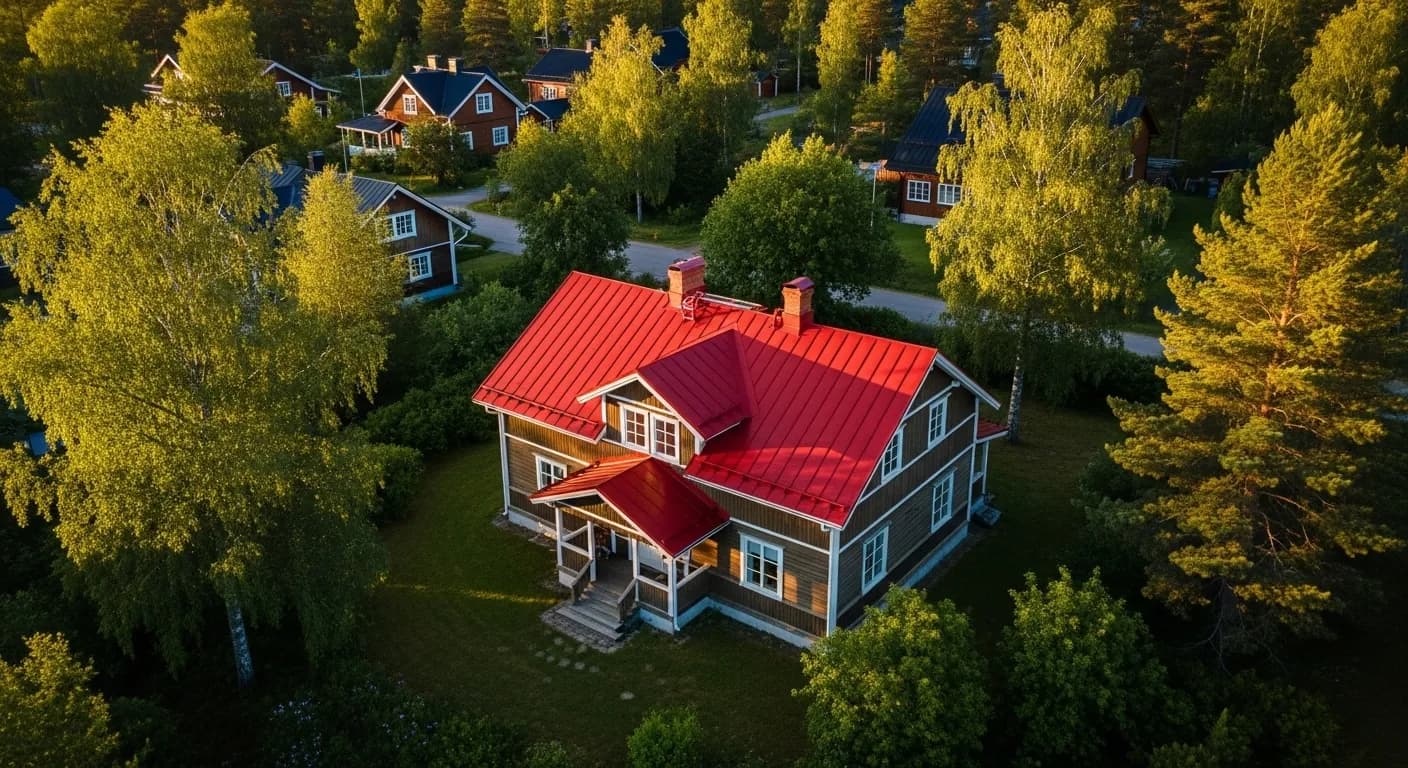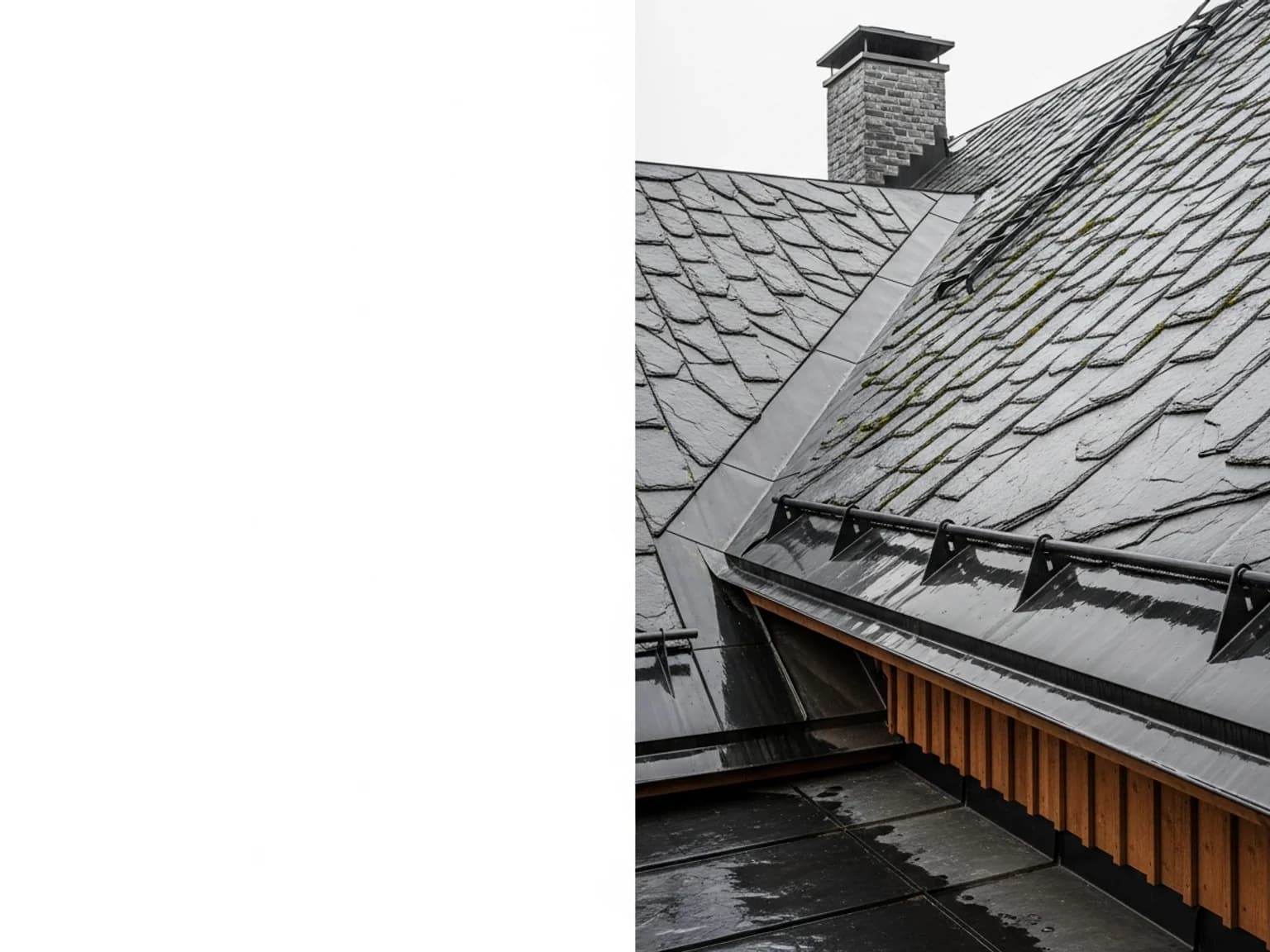
A slate roof is one of the oldest and most durable roofing materials in the world. Natural stone — typically slate (schist) — is split into thin slabs that are installed in an overlapping pattern on the roof. In Finland, slate roofs are rarer than in Central Europe, but they are found especially on prestigious properties, churches, and culturally significant buildings. The natural properties of slate make it an almost ideal roofing material: it is waterproof, fire-resistant, UV-resistant, and immune to biological decay. A roof made from high-quality slate lasts 80–150 years, and at best even over 200 years. The material's drawbacks are its high price (100–200€/m²) and heavy weight (40–80 kg/m²). The origin of the slate significantly affects its quality. Spanish, Welsh, and Brazilian slate are the best-known commercial grades. In Finland, domestic slate from the Kuopio and Kittilä regions is also used, although domestic varieties are primarily materials for ground construction and facades.
Properties and grades of slate
Slate is a metamorphic rock that forms from mudstone over millions of years under high pressure and temperature. Thanks to its cleavage properties, slate can be split into thin, flat slabs — typically 4–8 mm thick for roofing slabs.
High-quality roofing slate is recognised by its even cleavage surface, low water absorption value (below 0.6%), and good frost resistance. The European standard EN 12326 defines the testing methods and quality classifications for slate. S1-grade slate withstands at least 100 freeze-thaw cycles without damage — this is the minimum requirement for Finnish conditions.
Colour options depend on the stone's origin: Spanish slate is typically dark grey or black, Welsh varieties can be bluish or green. The colour does not fade, as it is the stone's natural mineral composition. The surface of slate plays beautifully with light, making it an architecturally unique material.
Installation and structural requirements
Installing a slate roof requires specialised expertise that only a few contractors in Finland possess. Each stone is inspected, sorted by size and thickness, and drilled or pierced for fixing. The stones are installed in an overlapping pattern on solid board decking from bottom to top — the overlap ensures that water cannot penetrate through the joints into the structure.
The weight of a slate roof places significant demands on the roof structure. The weight of 40–80 kg/m² is up to double that of tile roofing. The load-bearing structure must be carefully dimensioned, and in existing buildings, a structural engineer always assesses the load-bearing capacity before a slate roof is chosen.
The minimum roof pitch requirement is typically 22–25 degrees depending on the stone size and overlap type. For lower pitches, a greater overlap and possibly an underlay membrane are used as additional protection. The RT instruction card recommends a minimum pitch of 30 degrees for slate roofing in Finnish conditions to ensure optimal water drainage.
Maintenance and repair
A slate roof is exceptionally low-maintenance. The stone surface does not become mossy as easily as concrete tile, and it never needs to be painted or coated. Annual inspection covers detecting individual cracked stones, cleaning gutters, and checking the condition of fixings.
Replacing a single broken stone is possible without major demolition work. A skilled roofer removes the damaged stone and places a new one in its position. It is worth considering spare stones at the installation stage — the same stone may not be available decades later.
The greatest risk for a slate roof in Finland is frost weathering if low-quality stone is used. Cheap slate can begin to flake and weather within just 15–20 years. Therefore, no compromises should be made in material selection — S1 classification according to EN 12326 standard and the supplier's references from Nordic projects are essential.
Slate roofing in Finnish construction
In Finland, slate roofs are rare but highly valued. Historic slate roofs are found especially on manor houses and churches in Southern Finland, where they have lasted for centuries. In new construction, a slate roof is a clear premium choice, selected mainly by architecturally ambitious builders.
Finland's harsh winter conditions place strict demands on slate. Temperature fluctuations between -30°C and +30°C, repeated freeze-thaw cycles, and snow loads test the material's limits. A roof made from high-quality stone handles these excellently — after all, there are slate roofs in the Nordic countries that have lasted over 200 years.
In terms of cost, a slate roof is an expensive investment: 100–200€/m² installed. The price is influenced by the stone's quality and origin, the specialised installation skills required, and the possible need to reinforce the load-bearing structure. In lifecycle calculations, however, a slate roof is economically sensible, as there is no need to replace the roof within one or even two generations. It significantly increases the property's value.
Related terms
Want to learn more?
Read the full guide on this topic→
Request a roofing quote and enter a draw for a €1,000 gift card!
Submit a quote request — you're automatically entered. Winner drawn on 30 June 2026.
€1,000 gift card
Valid for all our roofing services
All quote requests are automatically entered. Rules: kotikatto.fi/arvonta
Content reviewed and verified
Updated: April 2026