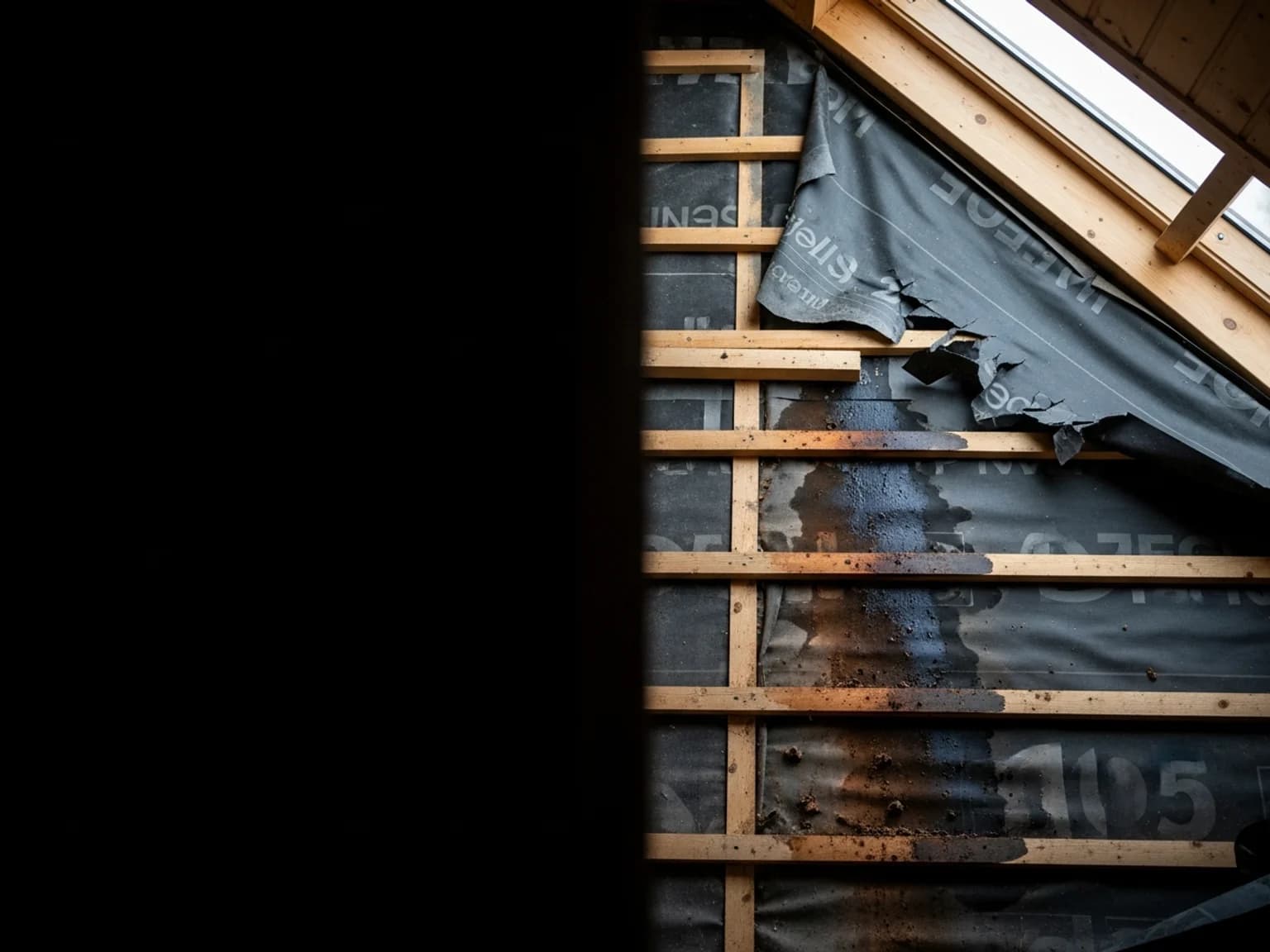
The underlayment is a waterproof or vapour-permeable membrane or fabric beneath the roofing material that serves as the roof's second line of defence. When the roofing material lets water through — for example via a seam, screw hole or defect — the underlayment channels the water safely to the eaves. Once the underlayment is damaged, this protection is lost and water reaches the structure directly. Underlayment damage is an especially insidious problem because it is hidden beneath the roofing material and is not visible from the outside. The damage can develop unnoticed for years and is often discovered only when structural moisture damage has already progressed significantly. Rotted battens, mouldy insulation and darkened rafters are signs of long-standing underlayment damage. The service life of the underlayment varies by material. In older buildings, the underlayment may be bituminised paper or plastic film with a limited service life. Modern breathable underlayments (diffusion-open membranes) typically last 30–50 years, but they too can be damaged prematurely by mechanical stress, UV exposure or animal damage.
Causes of damage
Ageing is the most common cause of underlayment damage. Old bituminised paper underlayments become brittle over time and lose their watertightness. Old plastic films also become brittle under the effects of UV radiation and temperature fluctuations. A brittle underlayment cracks and tears, ceasing to channel water away from the structure.
Mechanical damage is another common cause. During a roof renovation, maintenance work or antenna installation, the underlayment can be torn if the work is carried out carelessly. Wind-borne branches and debris can also press under the roofing material and tear the underlayment. In winter, ice and snow pressure can stretch and tear the underlayment, especially at fixing points.
Animal damage is a surprisingly common cause of underlayment failure. Martens, squirrels and birds can enter the roof substructure through the eaves and tear the underlayment for nesting material. The pine marten is especially destructive — it can tear large areas of underlayment in a single night. Protecting eaves gaps with mesh is an important preventive measure.
Identifying damage
Underlayment damage is difficult to detect without opening the roofing material. There are usually no externally visible signs — the covering looks intact. Inside, signs of damage often appear only when the moisture damage has progressed significantly: water stains on ceilings, musty odour, peeling paint and a feeling of dampness in upper-floor rooms.
When inspected from the attic, underlayment damage may be visible as light spots — the underlayment has become perforated and daylight shines through. Damp or darkened areas on battens and rafters indicate that water has penetrated through the underlayment. A musty smell in the attic is always an alarming sign.
A professional condition assessment includes an underlayment inspection from the attic space. Thermal imaging can detect damp areas in the structure without demolition work. During a roof renovation, the underlayment condition is revealed after the covering is removed — surprises often emerge at this stage, especially in older buildings.
Repair
Repairing the underlayment nearly always requires opening the roofing material over the damaged area. For small, localised damage, the underlayment can be patched with sealing tape or an underlayment patch, but more extensive damage requires renewing the underlayment across the whole area. In practice, widespread underlayment renewal means a roof renovation.
During the repair, the condition of the substructure is always checked as well. Battens, ventilation strips and rafters are inspected for rot and moisture. Decayed parts are replaced with new ones. Insulation is checked and replaced if it has become wet or mouldy. The structure must be fully dried before the new underlayment is installed.
The new underlayment is selected in accordance with current requirements. The recommended choice is a diffusion-open underlayment (vapour-permeable membrane) that allows the structure to dry but prevents liquid water from passing through. Underlayment overlap must be at least 150 mm, and seams are sealed with adhesive tape. RT 85-11163 and manufacturers' instructions provide detailed installation guidelines for different roof types.
Prevention and inspections
Underlayment damage is best prevented by careful installation and regular inspection. During installation, the underlayment must be laid with sufficient sag (slack) so that thermal movement and pressure loads do not stretch it. Fixing points and penetrations are sealed carefully.
Attic inspection is the best way to monitor underlayment condition. Inspection is carried out 1–2 times a year — in spring after winter and in autumn before winter. The inspection looks for light spots, damp areas, signs of mould and animal damage. Special attention is paid to the area around penetrations and the eaves zone.
Animal damage is prevented by protecting eaves gaps with steel mesh or sealing them with other suitable material. The mesh prevents martens and birds from entering the roof substructure. Ventilation openings are protected with grilles that allow air through but block animals. Roof safety also includes protecting the underlayment during maintenance work — walking on the roof without roof ladders can damage the underlayment.
Related terms
Want to learn more?
Read the full guide on this topic→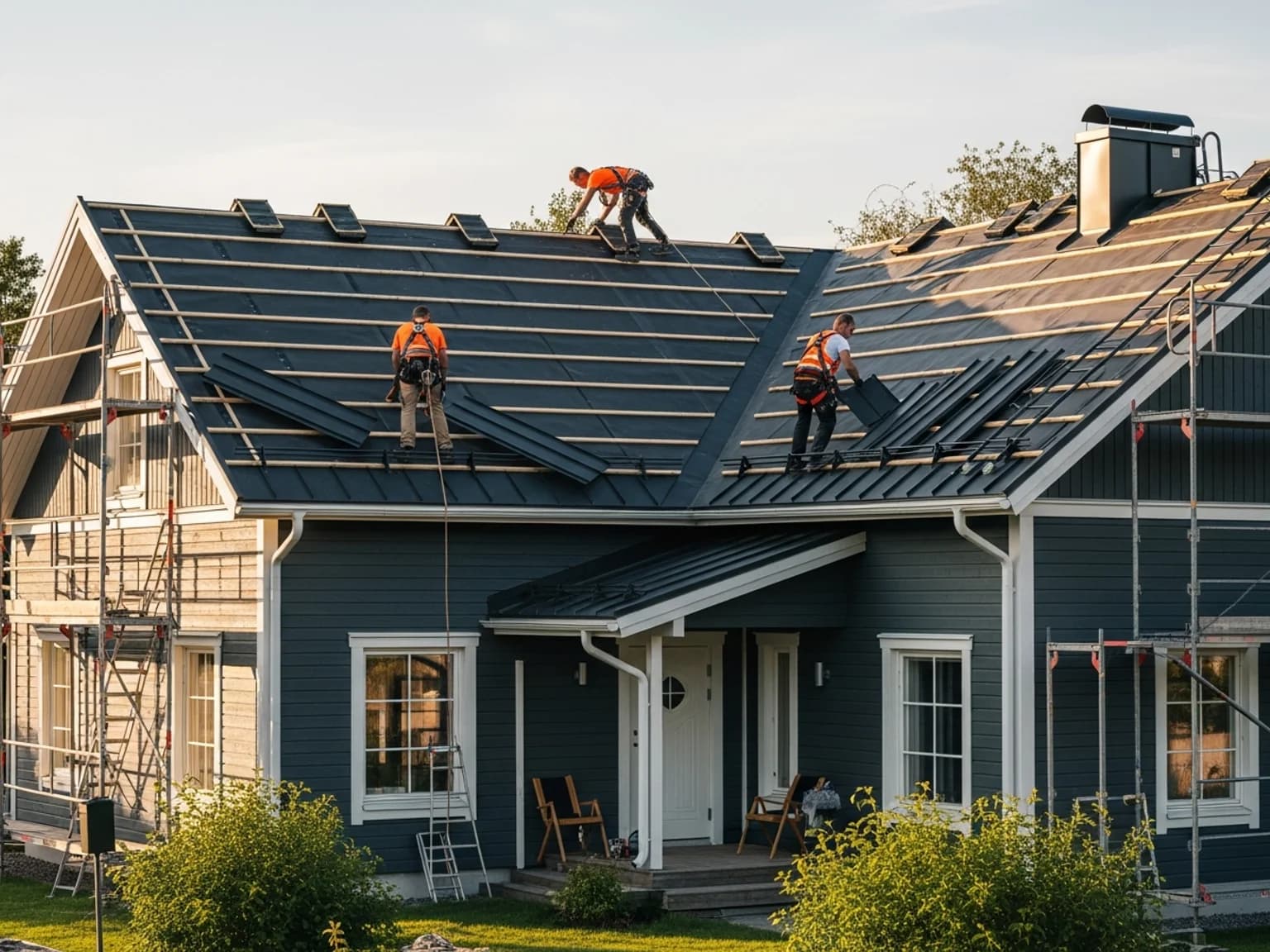
Request a roofing quote and enter a draw for a €1,000 gift card!
Submit a quote request — you're automatically entered. Winner drawn on 30 June 2026.
€1,000 gift card
Valid for all our roofing services
All quote requests are automatically entered. Rules: kotikatto.fi/arvonta
Content reviewed and verified
Updated: April 2026