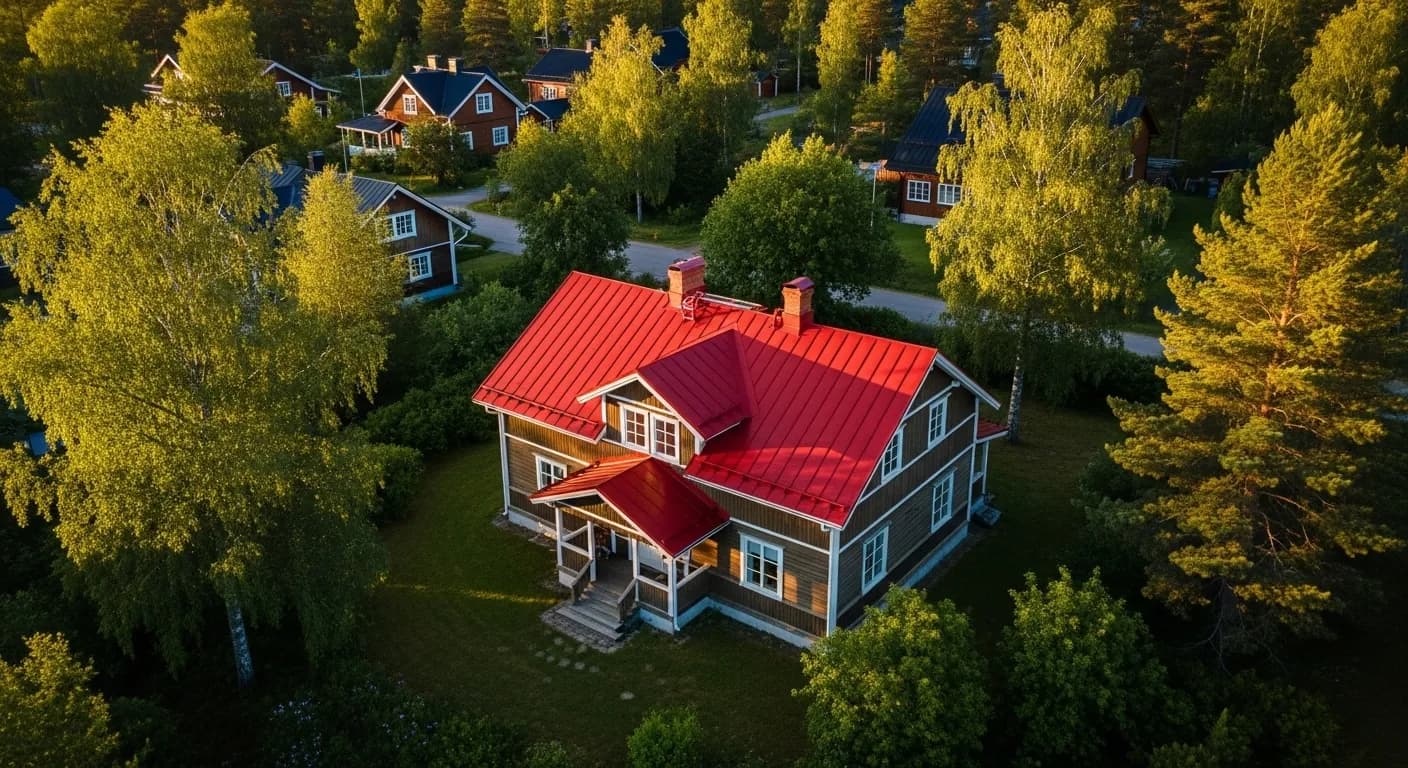
Roof ventilation refers to controlled air circulation within the roof structure — typically between the upper surface of the insulation and the underlayment or the actual roofing material. The purpose of ventilation is to transport moisture out of the structure, preventing the formation of mould, rot, and structural damage. Without functional ventilation, moisture condensing in the roof structure can cause significant and expensive damage. Finland's climatic conditions make roof ventilation particularly important. In winter, warm indoor air carries moisture through diffusion and convection into the roof structure, where it condenses on cold surfaces. In summer, the sun heats the roof surface intensely, causing moisture within the structures to evaporate — functional ventilation enables this drying process. According to building regulations, attic ventilation must be sufficient to prevent moisture accumulation in the structures. The Ministry of the Environment's decree on the moisture performance of buildings requires that ventilation space air exchange is dimensioned according to the structure and its intended use.
Ventilation principles and air gaps
Roof ventilation is based on natural air circulation, where cool outdoor air enters through the eaves, warms up within the roof structure, and rises upward, exiting through the ridge. This stack effect works effectively, especially in steep roofs where there is sufficient height difference between the eaves and the ridge.
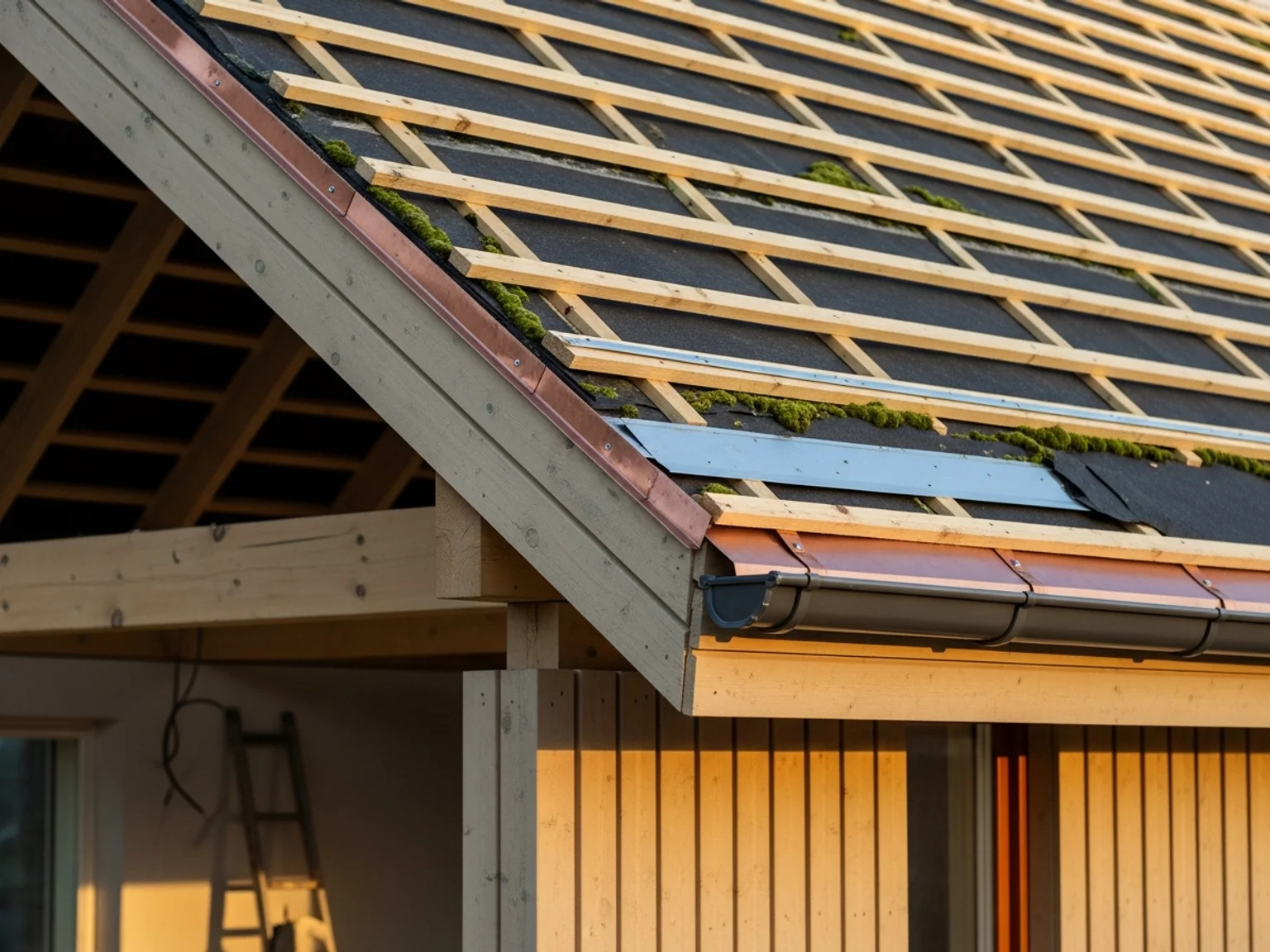
The ventilation gap, or air space, is located between the underlayment and the thermal insulation. The minimum height of the air gap is typically 50–100 mm, but the recommendation in RT guidance cards varies depending on the roof type and length. On long roof slopes (over 10 m), the air gap may be as much as 150 mm to ensure adequate air exchange along the entire slope length.
Functional ventilation requires both intake air openings at the eaves and exhaust air openings at the ridge. The total area of intake air openings is generally at least 2 per mille of the roof area, and the exhaust air opening area matches at least the intake openings. Openings are protected with mesh against insects and small animals.
Ventilation problems and ice dams
Insufficient ventilation leads to moisture accumulation in the roof structure. This manifests initially as condensation on the underside of the underlayment, then as mould formation on the surfaces of roof trusses and battens, and ultimately as decay of the timber structure. The damage can progress unnoticed for years before becoming visible indoors as moisture stains or odour.
Ice dams are another significant problem resulting from inadequate ventilation. When roof ventilation does not function, indoor heat reaches and warms the roof surface unevenly. Snow melts from the upper part of the roof, flows to the eaves where the roof is colder, and freezes forming a dam. The ice dam prevents meltwater from reaching the gutter and forces water to penetrate through the joints in the roofing material into the structure.
The most common causes of deteriorating ventilation are blocked ventilation openings, additional insulation added retrospectively without considering the ventilation gap, and incorrect underlayment installation. Repair typically requires removing the underlayment and battens and restoring the ventilation gap — the work is expensive but essential for the preservation of the structure.
Ventilation design and implementation
Roof ventilation design begins at the building design stage. The structural engineer dimensions the ventilation gap, the areas of intake and exhaust openings, and determines the underlayment type. A vapour-open (breathable) underlayment is now the most common choice, as it allows water vapour to pass through while preventing liquid water from entering the structure.
At the ridge, ventilation is implemented with a ventilated ridge flashing or separate ventilation vents. At the eaves, the ventilation gap is ensured through ventilation holes in the soffit cladding or separate ventilation grilles. A critical point is the junction of the eaves and wall, where insulation must not block the ventilation gap — special ventilation boards or fittings are often used for this purpose.
When adding insulation retrospectively, preserving the ventilation gap is particularly important. Too often, blown-in insulation or other additional insulation fills the ventilation gap completely, dramatically reducing ventilation. Professional insulation work always includes installing ventilation baffles before adding the insulation.
Related terms
Request a roofing quote and enter a draw for a €1,000 gift card!
Submit a quote request — you're automatically entered. Winner drawn on 30 June 2026.
€1,000 gift card
Valid for all our roofing services
All quote requests are automatically entered. Rules: kotikatto.fi/arvonta
Content reviewed and verified
Updated: April 2026