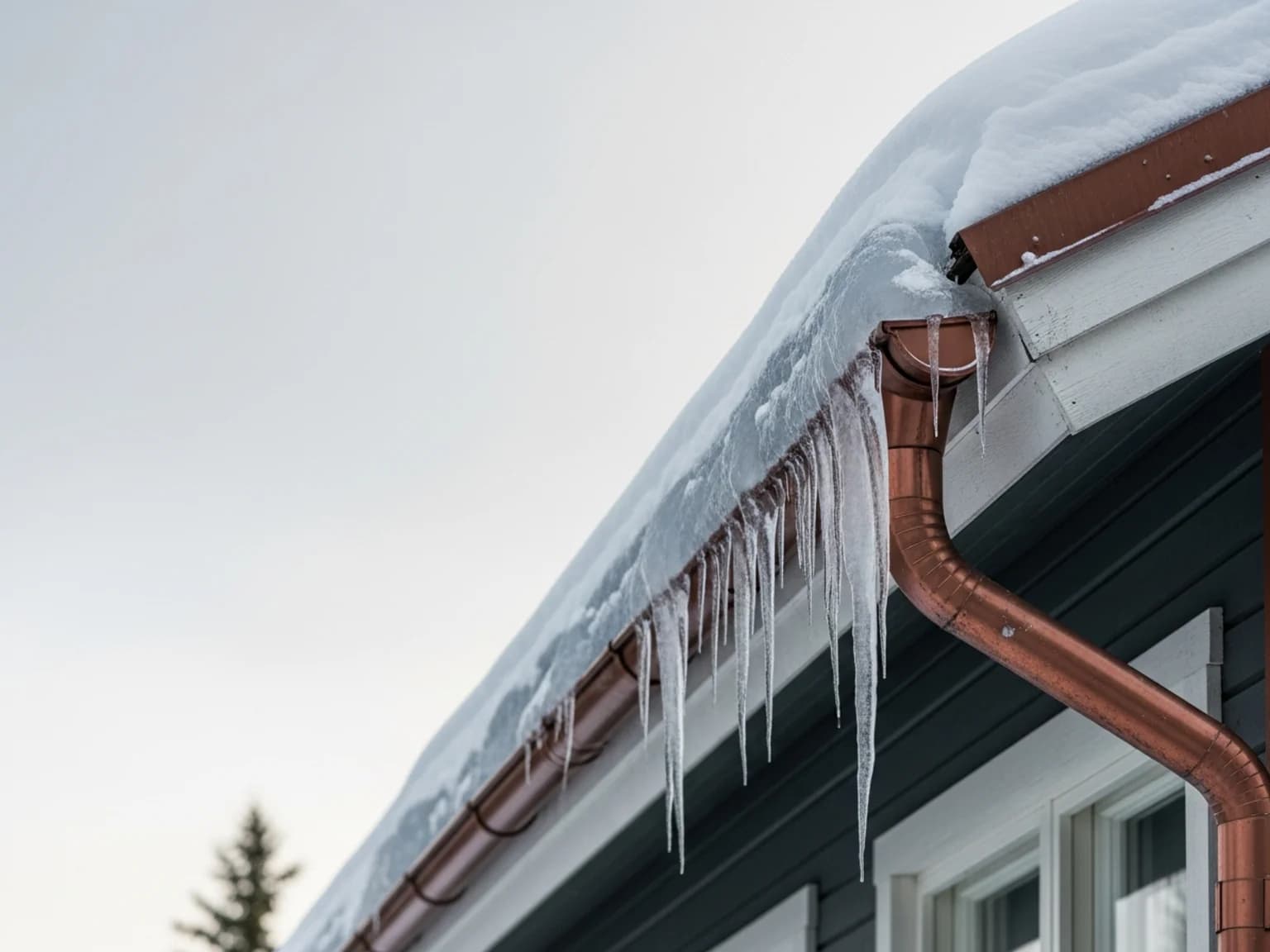
Ice dams are ice formations at the roof eaves that occur when heat from the upper part of the roof melts snow and the meltwater refreezes on the cold eaves. The resulting ice barrier prevents the normal drainage of meltwater and forces water to penetrate under the roofing material, from where it enters the structure and interior. Ice dams are a particularly common problem in Finland, where long winters, heavy snowfall and temperature fluctuations create ideal conditions for their formation. The problem is pronounced in buildings where the attic insulation is inadequate — heat leaking through the roof melts snow unevenly and triggers the ice dam formation cycle. The damage caused by ice dams can be significant. Water forced under the covering can destroy the underlayment, rot battens and rafters, damage attic insulation and ultimately cause moisture and mould damage indoors. In the worst cases, the weight of the ice dam can damage the eaves structure and the rainwater system.
Ice dam formation mechanism
An ice dam forms when the temperature of different parts of the roof varies significantly. The upper part of the roof, beneath which there is heated living space, is warmer than the eaves, which extend beyond the wall line into cold air. When the outdoor temperature is near zero, heat from the upper roof melts snow and the meltwater flows downward toward the eaves.
At the eaves the water meets the cold surface and freezes. Each melt-freeze cycle builds up the ice layer until a barrier forms that prevents water from draining off the roof. Water ponding behind the barrier seeks a path under the covering — it penetrates through seams, fixing holes and overlap joints into the structure.
The critical factor is the adequacy of attic insulation. A well-insulated attic does not allow heat through the roof, so snow melts evenly only from the effects of sunlight and outdoor air. Inadequate insulation or air leakage in the attic causes heat loss that melts snow unevenly and triggers ice dam formation. Poor attic ventilation also worsens the problem.
Identification and risk assessment
Identifying ice dams is often easy: a visible ice barrier and large icicles form at the eaves. But an ice dam can also form hidden beneath the snow layer, in which case the only sign is meltwater appearing indoors. Damp areas near the eaves in the attic are a sure sign of an ice dam problem.
Risk factors include: inadequate attic insulation (below current code), air leakage in the attic (e.g. at electrical and plumbing penetrations), insufficient attic ventilation, complex roof shapes (valleys, dormers), long eaves without heat and north-facing roof slopes.
Buildings most susceptible to ice dams are older ones with original insulation that does not meet current standards. Also buildings where attic space has been converted into living space without adequate insulation and ventilation upgrades suffer from ice dam problems. The RT 83-11032 guideline card provides instructions for attic insulation and ventilation design that, when followed, minimise the risk of ice dams.
Repair and acute measures
Repairing an acute ice dam problem in the middle of winter is challenging and dangerous. The ice dam should not be chopped off with an axe or hammer, as the roofing material is easily damaged. A safer method is to steam the ice away with a steam generator or use an ice-melting stocking (a stocking filled with calcium chloride placed on top of the ice barrier).
Heating cables are an effective solution for melting ice dams in the eaves area. A self-regulating heating cable is installed along the eaves edge and in the gutter, activating automatically when the temperature drops near zero. The cable keeps the eaves area thawed and allows water to drain freely.
The permanent solution to an ice dam problem is always improving attic insulation and ventilation. Additional insulation reduces heat loss through the roof, and effective ventilation keeps the roof deck cold. Air leaks in the attic are sealed carefully. When the roof surface stays uniformly cold, snow melts only from the effects of outdoor air and ice dams do not form.
Prevention and long-term solutions
The most effective prevention is adequate attic insulation and ventilation. Current building regulations require an attic U-value of no more than 0.09 W/m²K, which corresponds to approximately 400–500 mm of blown-in insulation. In older houses, insulation is often only 150–200 mm, and adding more is the most cost-effective measure to prevent ice dams.
Attic ventilation must be adequate — the ventilation gap must be at least 100 mm and the total area of ventilation openings at least 1/200 of the attic floor area. The ventilation path must be free of obstructions, and there must be openings at both the eaves and the ridge. Ventilation performance is checked as part of annual roof maintenance.
In the eaves area, anti-icing solutions can be used, such as a waterproof underlayment (ice shield) along the eaves for the first metre. This does not prevent ice dam formation but prevents the ponding water from entering the structure. A metal eaves drip edge or dedicated drip eaves also promote water drainage and reduce the impact of the ice dam. A comprehensive solution combines insulation, ventilation and eaves protection.
Related terms
Want to learn more?
Read the full guide on this topic→
Request a roofing quote and enter a draw for a €1,000 gift card!
Submit a quote request — you're automatically entered. Winner drawn on 30 June 2026.
€1,000 gift card
Valid for all our roofing services
All quote requests are automatically entered. Rules: kotikatto.fi/arvonta
Content reviewed and verified
Updated: April 2026