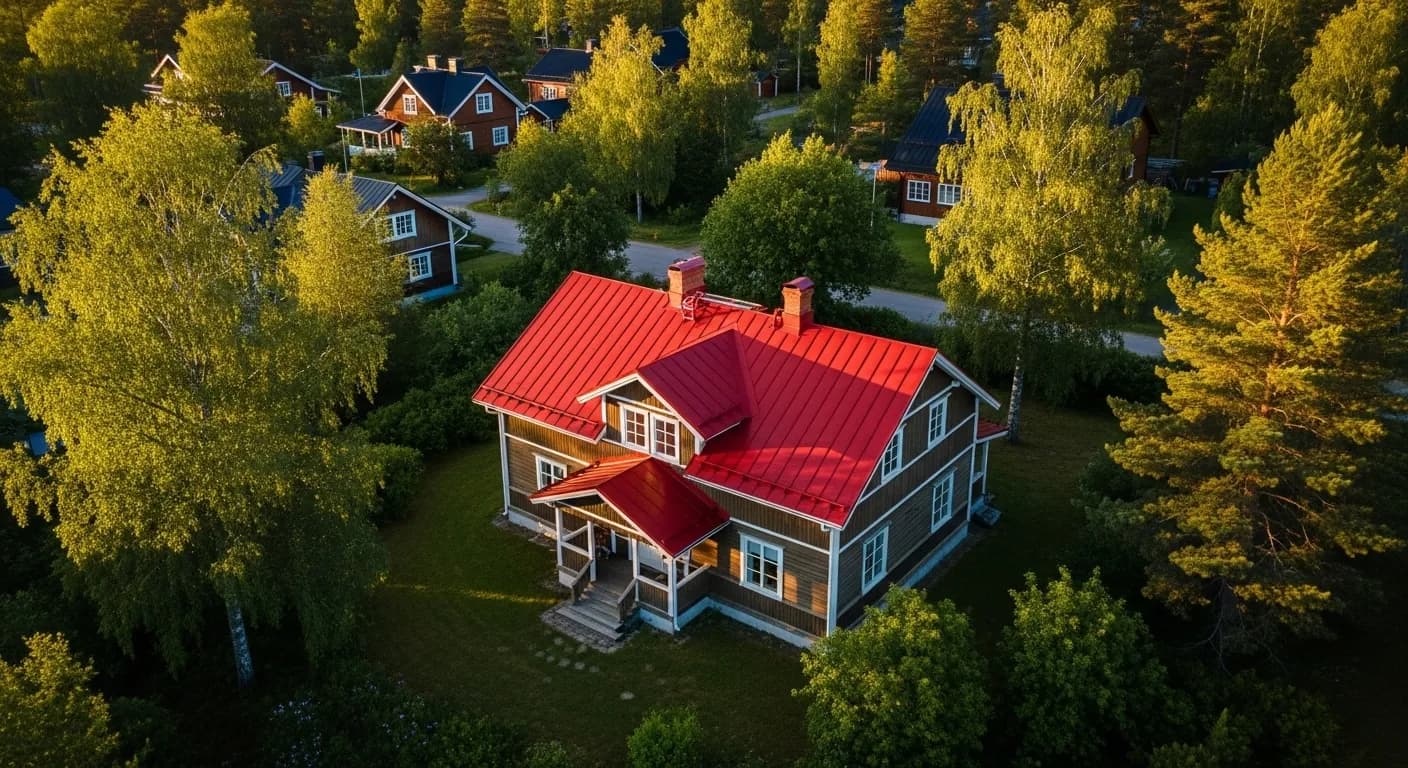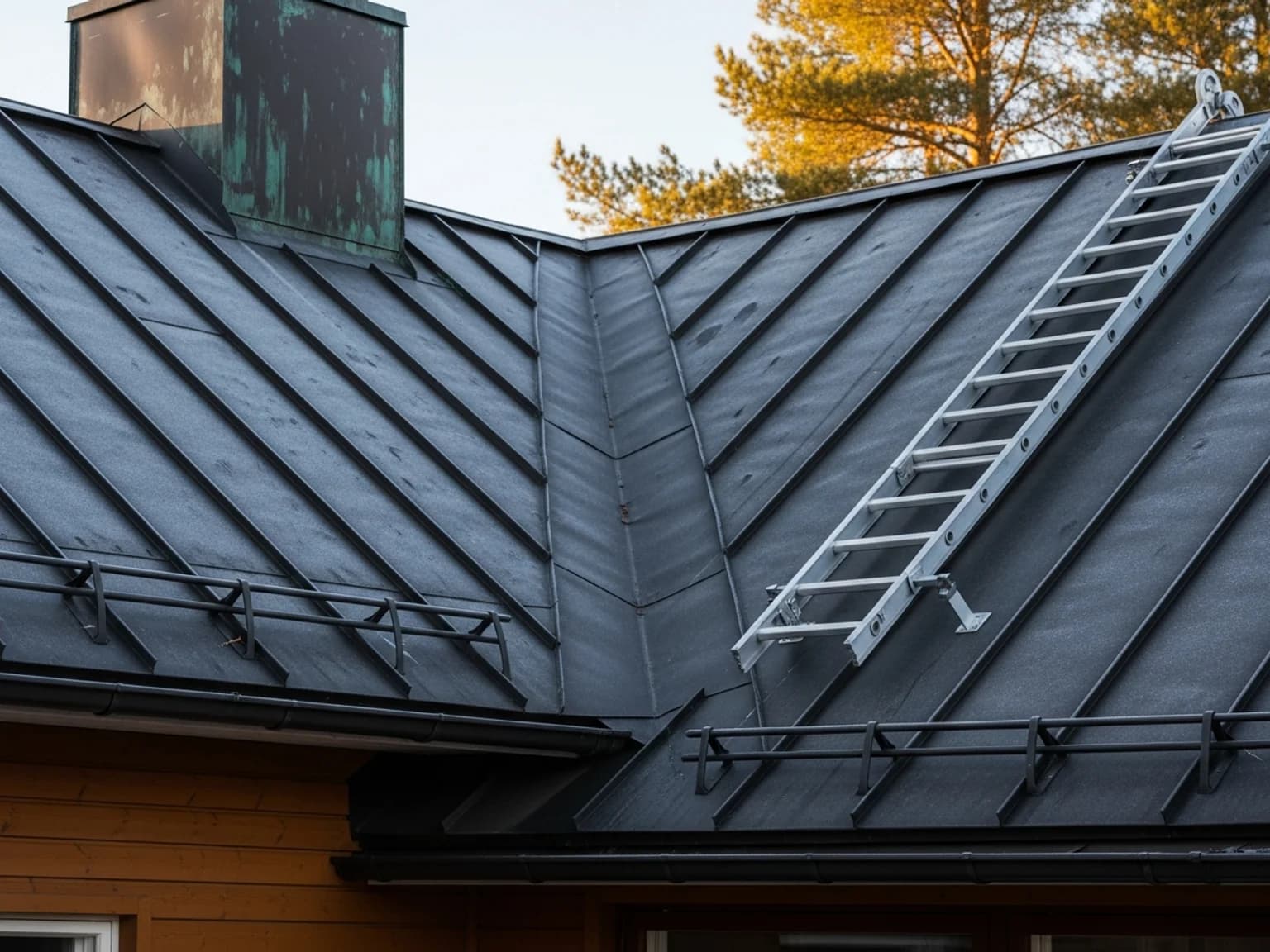
Roof ladders are fixed ladders installed on the sloping surface of a roof that enable safe movement on the roof slope. They form a walkway from the access ladders to roof maintenance points such as the chimney, antenna or ventilation pipes. Using roof ladders eliminates the need to walk directly on the roofing material, reducing both the risk of falling and damage to the roof covering. Finnish building regulations require roof ladders on all buildings that have a chimney or other regularly maintained equipment located on the roof. The requirement applies to both new construction and major roof renovations. Roof ladders are dimensioned according to standard SFS-EN 516 and must safely support a person's weight in all weather conditions. Roof ladders are generally installed in as straight a line as possible with the access ladders so that the transition from one ladder to the other is safe and logical. If the roof shape or the location of maintenance points requires the route to continue laterally, a combination of roof ladders and a roof walkway is used to create a comprehensive route network.
Structure and types of roof ladders
Roof ladders consist of two longitudinal rails and cross-rungs that serve as steps. Rail width is typically 350–400 mm and rung spacing approximately 300 mm. The ladders are fixed to the roof with special brackets that hook onto the battens or attach directly to the roof structure through the roofing material.
The material is hot-dip galvanised steel or aluminium, and the ladders are available in RR shades matched to the roof colour. The most common lengths are 1.8–3.0 metres, and ladders can be extended with joining pieces as needed. On long roof slopes, several ladder sections in succession are often required.
A special type is the so-called safety ladder, which has wider rungs with anti-slip surfaces. These are suitable for particularly steep roofs or locations where the ladders are used frequently. Some models feature an integrated fall-arrest rail to which a harness slider can be attached.
Installation and positioning
Roof ladder positioning is planned as part of the overall roof safety product system. The main principle is that every maintenance point must have a safe access route from the access ladders. The route to the chimney is the most important, as the chimney sweep uses it annually.
Fixing is done through the roofing material into the batten or load-bearing structure. Seals and flashing pieces are used at the fixing points to prevent water from entering the structure. Incorrect fixing can cause a roof leak, so installation care is of paramount importance.
Installation follows the RT 85-11132 guideline card. Roof ladders are installed so that their upper end extends over the ridge or alternatively to a roof walkway leading to the maintenance point. At the junction of the access ladder and roof ladder there must be a safe transition point where the climber can change from one ladder to the other without losing three-point contact.
Statutory requirements
The installation of roof ladders is governed by the Land Use and Building Act, the Finnish National Building Code and the Rescue Act. The Ministry of the Environment decree on building safety of use requires that safe access to the roof must be provided for maintenance and inspections.
In building permit documents, roof safety products are shown in a roof safety drawing indicating the locations of access ladders, roof ladders, roof walkways and snow guards. Building control inspects the product installation at the commissioning inspection. Missing roof ladders can prevent the building from being taken into use.
The Rescue Act obligates the building owner to maintain a safe access route to the roof. The chimney sweep is obliged to report deficient roof safety products to the rescue authority. Insurance companies may also require roof safety products under their policy terms — missing products may affect claim settlement in the event of damage.
Costs and service life
The material price of roof ladders is approximately 50–120 euros per metre depending on the model and material. The typical roof ladder cost for a detached house is 300–800 euros for materials. Installation cost is approximately 40–70 euros per metre, so the total cost installed is often 500–1,500 euros.
The service life of high-quality hot-dip galvanised roof ladders is 30–50 years, meaning they often last the entire lifespan of the roofing material. Ladder condition is checked during annual maintenance — in particular fixing points, rung condition and any corrosion damage.
Replacing roof ladders is recommended during a roof renovation even if the old ladders are still functional. Installing new roofing material requires removing the ladders, and at the same time it makes sense to update the products to meet current regulations. In older buildings where roof ladders are absent, they must be added during a roof renovation.
Related terms
Want to learn more?
Read the full guide on this topic→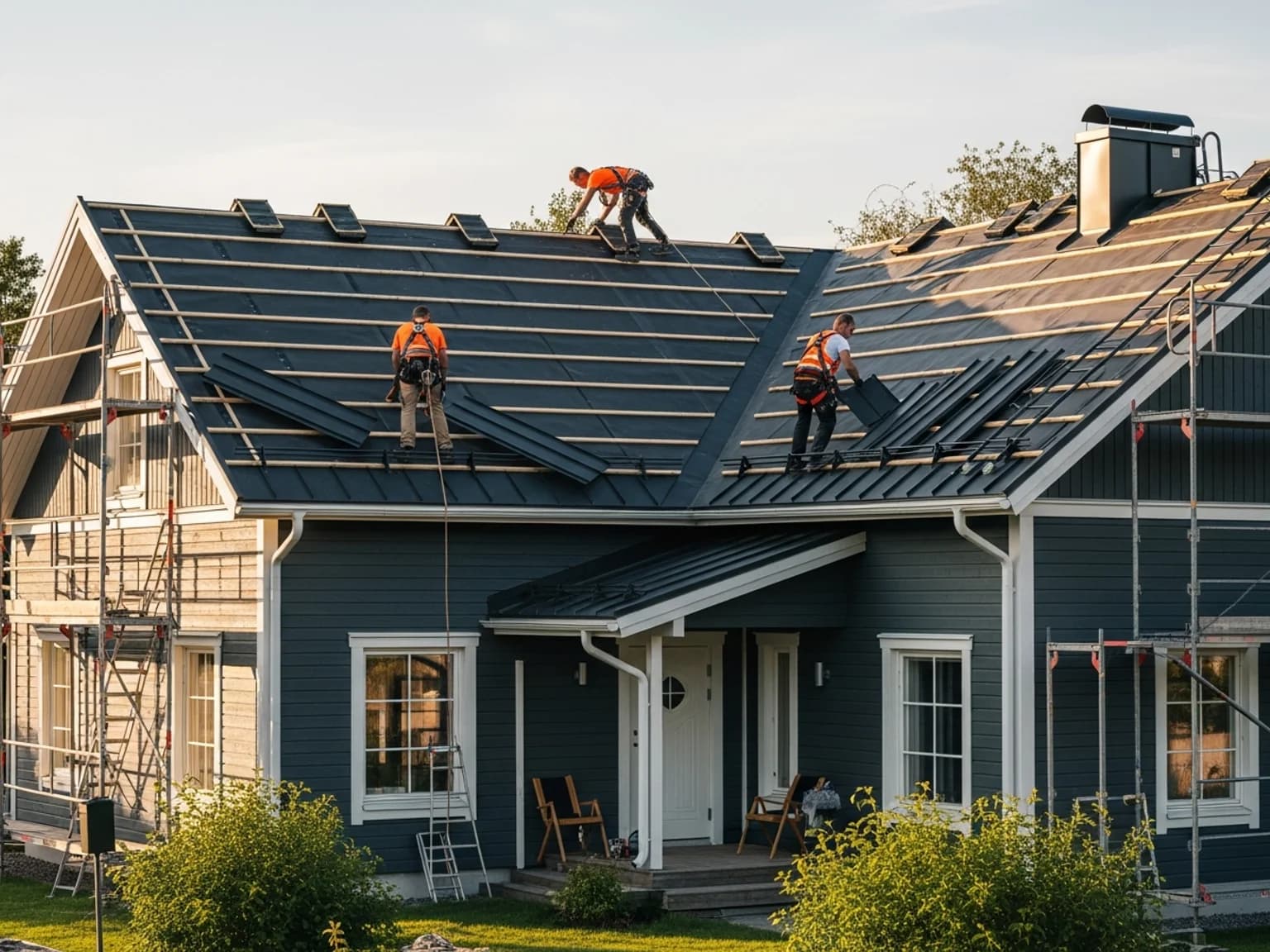
Request a roofing quote and enter a draw for a €1,000 gift card!
Submit a quote request — you're automatically entered. Winner drawn on 30 June 2026.
€1,000 gift card
Valid for all our roofing services
All quote requests are automatically entered. Rules: kotikatto.fi/arvonta
Content reviewed and verified
Updated: April 2026